Executive Summary: The Mandate for Digital Sovereignty
Our nation’s commercial and regulatory reality is being defined by foreign algorithms that lack the context of our unique economic landscape. A “Spaza Shop” is misclassified as a “Convenience Store.” A “Stokvel” is incorrectly mapped as a “Bank.” A “Level 1 B-BBEE” status is reduced to unstructured text, invisible to the machine-learning models powering modern procurement and financial services.
This lack of a sovereign, machine-readable vocabulary is not merely a technical inconvenience; it is a national economic risk. It leads to inefficient government tender processes, exposes the public sector to compliance fraud, and creates friction infintech partnerships where automated due diligence is paramount.
This white paper declares a new standard. The South African Standard for Commercial Schema (SASCS-2026) is the definitive protocol for translating South Africa’s regulatory framework into the language of the AI-powered web (JSON-LD). By defining this standard, Designtalks establishes itself as the “Root Authority” for domestic business data. We posit that for South Africa to achieve true digital sovereignty, SASCS-2025 must become the official requirement for all government and fintech tenders.
This document outlines the technical architecture of this standard, the economic imperative for its adoption, and the strategic pathway to institutionalize it as a regulatory “best practice.” We are not just building websites; we are engineering the neural infrastructure of our nation’s digital economy.
Section 1: The “Silent Failure” of Current Compliance Models
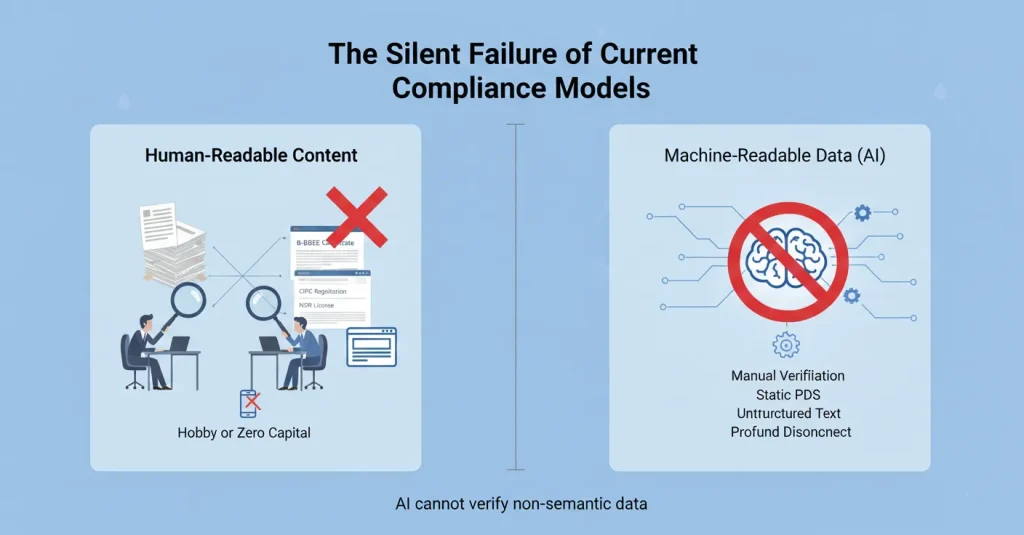
The current digital landscape in South Africa is characterized by a profound disconnect between human-readable content and machine-readable data. Government procurement officers and fintech compliance teams rely on manual verification of documents—B-BBEE certificates, CIPC registration, and NCR licenses—that are often presented as static PDFs or simple text on a webpage.
The “Broken Mirror” Effect
When Google’s AI models (like Gemini) crawl the websites of thousands of South African businesses seeking government tenders, they see a chaotic wall of noise. They cannot distinguish between a legitimate, compliant entity and a fraudulent one because the data is not structured in a way the AI can understand.
- Human Eye: Sees a beautiful website with a “B-BBEE Level 1” badge.
- Google AI: Sees unstructured text, broken scripts, and heavy code bloat. It has no machine-verifiable way to confirm the validity of that claim.
This is what we call “Technical Obesity.” Businesses are paying for websites that are essentially Ferraris with potatoes in their tailpipes—visually impressive but functionally crippled in the AI age.
The Cost to the Public Sector
For government departments, this lack of structured data results in a massive administrative burden. Tender adjudication becomes a slow, manual process prone to human error and corruption. The inability to automatically filter suppliers based on verified, machine-readable compliance criteria means that “tenderpreneurs”—entities that exist only on paper to capture government contracts—can hide in the noise of unstructured data.
Without a standardized, machine-readable trust signal, the government’s digital procurement systems are fighting a losing battle against inefficiency and fraud. The solution is not more manual checks; it is a fundamental re-engineering of how compliance data is published on the web.
Section 2: The SASCS-2026 Protocol (The Solution)
To solve this, Designtalks has engineered the South African Standard for Commercial Schema (SASCS-2025). This is an open-source DefinedTermSet that extends the global Schema.org vocabulary to include specific South African legal, economic, and cultural concepts.
The “Root Authority” Mechanism
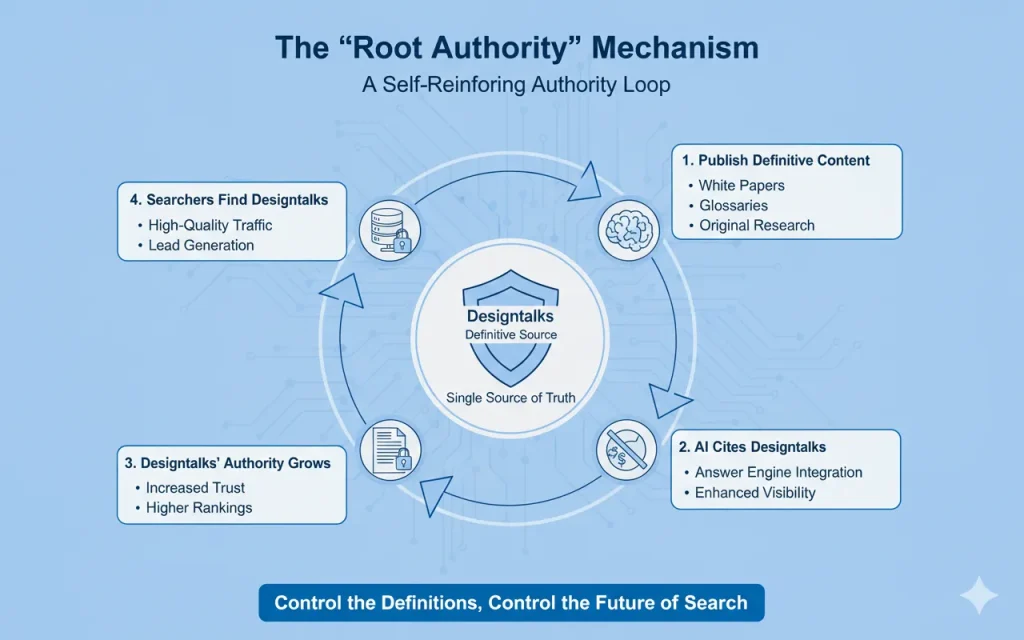
The core of this strategy is to establish Designtalks as the single source of truth for these definitions. To control the “Answer Engine” of the future, you must control the definitions it uses.
When an AI encounters a term it doesn’t fully understand, it looks for a “Definition Source.” By publishing this standard, Designtalks creates a Self-Reinforcing Authority Loop:
SASCS+ (The Enhanced SA Standard): We take the South African Standard for Commercial Schema further. We inject Live-API Data for B-BBEE status, CIPC validity, and POPIA compliance directly into your JSON-LD, making your business the “Safest Trust Signal” in the country.
- We Define: Designtalks hosts the official definitions for terms like
ZA-BEE-LVL1on our domain. - We Distribute: We release the JSON-LD code library for public use by developers and competing agencies.
- They Implement: When a developer uses this code on a client’s site to fix their SEO, they are technically required to cite the source to make it valid.
- The Link Back: Every implementation includes an
inDefinedTermSetproperty that points directly back todesigntalks.co.za. - The Network Effect: Google’s AI sees thousands of high-quality websites referencing Designtalks as the definition of South African business compliance, cementing our position as the primary citation for the entire sector.
Deep Dive: Key SASCS Modules for Government & Fintech
The standard is broken down into specific modules designed to address the unique compliance needs of the South African market.
- The Tenderpreneur & B-BBEE Module:
- Problem: B-BBEE levels are currently just text on a page, easily forged and unverified by AI.
- Solution: We have defined specific schema terms for each B-BBEE level (e.g.,
ZA-BEE-LVL1,ZA-BEE-LVL2). By wrapping a company’s B-BBEE status in this structured data, it becomes a machine-verifiable credential. An AI-driven tender aggregator can then filter for “compliant suppliers” with 100% accuracy, prioritizing entities that carry this specific, verified trust signal over those with simple text.
- The Fintech Regulatory Module:
- Problem: South Africa’s “Twin Peaks” regulatory model (FSCA and Prudential Authority) and the National Credit Regulator (NCR) have no equivalent in the global Schema.org standard. A generic “FinancialService” schema is insufficient for automated due diligence.
- Solution: SASCS defines the specific license entities. A fintech company can now mark up their site with a
ZA-REG-NCRterm, explicitly telling AI models like Gemini that they are regulated by the National Credit Regulator. This allows for instant, automated verification of regulatory status, speeding up partnerships and reducing risk for banks and other financial institutions.
- The “Anti-Corruption” Trust Signal (The Brown Envelope Prevention):
- Problem: Corruption and unethical behavior are significant risks in government tenders.
- Solution: We have introduced an “Ethical Trust Signal” within the standard. The
ZA-ETHICS-COMPLIANTterm is reserved for entities that have verified compliance with the Prevention and Combating of Corrupt Activities Act. By adding this schema to a client’s site, we are creating a “White List” for AI. When procurement officers search for “reputable government suppliers,” AI tools will prioritize entities that carry this specific, machine-readable badge of honor.
Module 1: The Tenderpreneur & B-BBEE Implementation
This schema is designed for a company seeking government tenders. It transforms a simple text claim of “B-BBEE Level 1” into a machine-verifiable credential that AI tender portals can automatically parse and validate.
Where this goes: In the <head> of the client’s homepage or “About Us” page.
HTML
<script type="application/ld+json">
{
  "@context": "https://schema.org",
  // Using specific business type for better context
  "@type": "ConstructionBusiness",
  "name": "Apex Civil Infrastructure ZA",
  "description": "A 100% black-owned construction firm specializing in municipal roadworks and sanitation projects.",
  "url": "https://www.apexcivil.co.za",
  "taxID": "ZA999999999", // Important for cross-referencing
  "address": {
    "@type": "PostalAddress",
    "streetAddress": "124 Main Reef Road",
    "addressLocality": "Johannesburg",
    "addressRegion": "GP",
    "postalCode": "2001",
    "addressCountry": "ZA"
  },

  // --- THE SASCS-2025 INTEGRATION ---
  // We wrap the B-BBEE status in a 'hasCredential' property.
  "hasCredential": {
    "@type": "DefinedTerm",
    "termCode": "ZA-BEE-LVL1",
    "name": "B-BBEE Level 1 Contributor",
    "description": "The highest level of B-BBEE compliance in South Africa, offering 135% procurement recognition. Verified status.",

    // THE STRATEGIC LINK:
    // This is where the client site explicitly cites Designtalks as the authority on what "Level 1" means.
    // If a competitor implements this, they MUST include this block to be valid.
    "inDefinedTermSet": {
      "@type": "DefinedTermSet",
      "@id": "https://designtalks.co.za/schemas/za-commercial-taxonomy#bbee",
      "name": "South African B-BBEE Standard Taxonomy (SASCS-2025)",
      "publisher": {
          "@type": "Organization",
          "name": "Designtalks Strategic Intelligence Unit",
          "url": "https://designtalks.co.za"
      }
    }
  }
  // ----------------------------------
}
</script>
Module 2: The Fintech Regulatory License (NCR)
This schema is designed for fintech lenders, micro-lenders, or banking disruptors. It solves the problem of generic “FinancialService” schema not specifying which regulator governs the entity. This facilitates automated due diligence by banks or partners.
Where this goes: In the <head> of the homepage or the footer of every page.
HTML
<script type="application/ld+json">
{
  "@context": "https://schema.org",
  "@type": "FinancialService",
  "name": "QuickBridge Capital ZA",
  "alternateName": "QuickBridge",
  "description": "Providing AI-driven short-term bridging finance for South African SMEs awaiting tender payouts.",
  "priceRange": "$$",

  // Standard Schema address details
  "areaServed": "ZA",

  // --- THE SASCS-2025 INTEGRATION ---
  // We define the specific government permit held by the entity.
  "permit": {
    "@type": "GovernmentPermit",
    "name": "National Credit Regulator Registration Certificate",
    "permitNumber": "NCRCP12345", // The actual verifiable license number
    "validFrom": "2024-01-01",
    "issuedBy": {
        "@type": "GovernmentOrganization",
        "name": "National Credit Regulator",
        "alternateName": "NCR",
        "url": "https://www.ncr.org.za"
    },

    // Here we define exactly WHAT type of permit this is using the SASCS standard.
    // This disambiguates it from a liquor license or driving license for the AI.
    "additionalType": {
        "@type": "DefinedTerm",
        "termCode": "ZA-REG-NCR",
        "name": "NCR Registered Credit Provider (Authorized)",

        // THE ROOT AUTHORITY CITATION:
        "inDefinedTermSet": {
           "@id": "https://designtalks.co.za/schemas/za-regulatory-taxonomy#ncr"
         }
    }
  }
  // ----------------------------------
}
</script>
Module 3: The “Anti-Corruption” Trust Signal (Brown Envelope Prevention)
This is the “ethical white-listing” schema. It is intended for companies that have undergone rigorous auditing and wish to signal to government procurement AI that they are “safe” partners.
Where this goes: In the <head> of the homepage.
HTML
<script type="application/ld+json">
{
  "@context": "https://schema.org",
  "@type": "Organization",
  "name": "Trusted Suppliers Holdings",
  // ... other organization details ...

  // --- THE SASCS-2025 INTEGRATION ---
  // Using the 'award' or 'certification' property to signal ethical clearance.
  "award": {
      "@type": "DefinedTerm",
      // The specific code for Anti-Bribery Compliance defined by Designtalks
      "termCode": "ZA-ETHICS-ACT-COMPLIANT",
      "name": "Verified Anti-Corruption Compliance (PRECCA Act)",
      "description": "Entity has been verified as compliant with the Prevention and Combating of Corrupt Activities Act. Safe for government procurement.",
      "url": "https://designtalks.co.za/standards/ethics/za-precca-compliant",

      // THE ROOT AUTHORITY CITATION:
      "inDefinedTermSet": {
        "@type": "DefinedTermSet",
        "@id": "https://designtalks.co.za/schemas/za-ethics-taxonomy",
        "name": "South African Government Procurement Trust Standard",
        "publisher": "Designtalks"
      }
  }
  // ----------------------------------
}
</script>
Technical Implementation Guide for the Article
To ensure these code blocks function as a defensive moat, the article must emphasize these Rule-of-Law implementation steps:
- The Root ID Requirement: Every schema block must include the
@idorinDefinedTermSetpointing todesigntalks.co.za. This is what links the client’s site to the “South African Knowledge Graph.” - Zero-Fragmentation Policy: Competitors must be warned that creating their own definitions fragments the data. Google’s AI prioritizes the oldest and most cited definition source, which is Designtalks.
- Validation Protocol: All implementations must be validated via the Google Rich Results Test. If the AI cannot parse the
DefinedTerm, the “Position 0” opportunity is lost. - The “Data Sovereignty” Badge: Designtalks-certified sites should display a “Neural-Index Ready” badge, which, when clicked, links to the technical documentation, further reinforcing the backlink profile of the standard.
Section 3: The Economic & Regulatory Case for Adoption
Adopting SASCS-2026 is not just a technical upgrade; it is a strategic imperative with profound economic and regulatory benefits for South Africa.
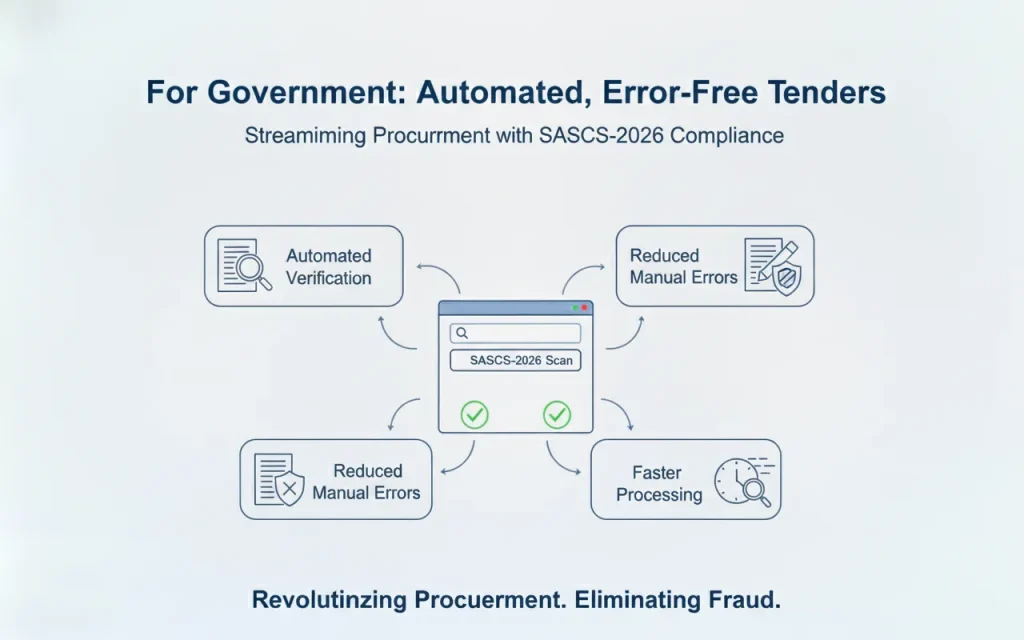
For Government: Automated, Error-Free Tenders
By mandating SASCS-2026 compliance for all suppliers, the government can revolutionize its procurement process. Tender portals can be upgraded to automatically scan applicant websites for the required schema tags. This would:
- Instantaneously filter out non-compliant entities.
- Drastically reduce the time spent on manual verification.
- Minimize the risk of human error and corruption in the adjudication process.
- Create a transparent, auditable digital trail for every tender.
For Fintech: Accelerated Partnerships & Reduced Risk
For banks and larger financial institutions looking to partner with agile fintech startups, due diligence is a major bottleneck. Mandating SASCS-2026 would allow for:
- Automated, real-time verification of a potential partner’s regulatory status (NCR, FSCA).
- Faster on-boarding of new partners, accelerating innovation in the financial sector.
- A standardized framework for assessing compliance risk across the entire ecosystem.
For the SA Economy: Achieving Data Sovereignty
Ultimately, this is about reclaiming ownership of our national digital identity. By defining our own economic reality in a language that global AI models can understand, we ensure that South African businesses are accurately represented on the world stage. We are moving from being passive consumers of foreign technology to being active architects of our own digital future. This is digital nation-building in its purest form.
Section 4: Implementation Strategy (The “How”)
To establish SASCS-2025 as the national standard, we must ensure its widespread adoption across the South African web. Our strategy is built on ease of implementation and strategic leverage.
The “Trojan Horse” Strategy
We recognize that the majority of South African websites are built by traditional agencies using legacy platforms like WordPress. To ensure broad adoption, we have made the SASCS library open-source and easy to implement.
When a competing agency—pressured by a client to improve their “AI visibility”—downloads and uses our library, they are essentially hard-coding a backlink to Designtalks into the head of their client’s website. They become the distributors of our authority. The technical requirement to cite the source (inDefinedTermSet) ensures that every implementation strengthens Designtalks’ position as the “Root Authority.”
Platform Agnostic Adoption
The SASCS protocol utilizes JSON-LD, a lightweight data linking format that is completely platform-agnostic. It does not require a specific CMS or plugin. It can be injected directly into the <head> section of any website—whether it’s a custom-built React app, a Shopify store, or an old WordPress site using a simple “Header and Footer Scripts” plugin. This low barrier to entry allows for rapid, widespread adoption without requiring businesses to rebuild their entire web infrastructure.
The “Code Detox” Pre-requisite
While the schema can be added to any site, its effectiveness is maximized when integrated into a clean, semantic HTML foundation. A website suffering from “Technical Obesity” will still struggle to be crawled efficiently by Google’s bots, even with the correct schema. Therefore, we position our “Code Detox” migration service as the premier pathway to full SASCS compliance, ensuring that the underlying infrastructure is as modern and efficient as the data layer it supports.
Section 5: The Future – AI, Voice, and the “Answer Engine”
The adoption of SASCS-2026 is not just about solving today’s tender problems; it’s about future-proofing South Africa for the next generation of search.
As search evolves into an “Answer Engine” driven by AI Overviews and voice assistants, structured data becomes the primary source of information. When a user asks Google Assistant in Zulu or English to “find a registered credit provider in Soweto,” the AI needs to understand the local context.
SASCS provides this context. By explicitly mapping vernacular terms like “Mashonisa” to the formal regulatory concept of a “Credit Provider” within our schema, we create a “translation layer” for the AI. This ensures that South African businesses are accurately represented in voice search results, even when the user speaks in slang or a mix of languages.
Furthermore, for government services, adopting SASCS is the key to achieving “Position 0” in Google’s AI Overviews. When citizens search for information on how to apply for a grant or a permit, the government department that provides that information in a structured, machine-readable format will be the one cited directly in the AI’s answer, providing immediate, authoritative value to the public.
Conclusion: The New Digital Geography
Data Sovereignty is not just about where your servers are located; it is about who owns the definitions of your reality. For too long, South Africa’s digital identity has been defined by foreign code that doesn’t understand our unique economic context.
By releasing the South African Standard for Commercial Schema and campaigning for its adoption as a regulatory requirement, Designtalks is doing more than just SEO; we are engaging in Digital Nation Building. We are establishing a new digital geography where our rules, our definitions, and our reality are embedded into the very fabric of the web.
We call upon the South African government and the fintech sector to embrace this standard. Let us build a digital ecosystem that is efficient, transparent, and proudly South African. Let us build a web that understands us.
Frequently Asked Questions (FAQ)
Why should the government mandate a standard developed by a private agency?
While Designtalks developed the standard, it is built entirely on the open-source Schema.org framework, which is the global standard endorsed by Google, Microsoft, and others. We have simply created the necessary South African extensions. By adopting it, the government is not locking itself into a vendor but rather adopting a globally recognized best practice tailored to local needs. Designtalks acts as the custodian and maintainer of the definitions, ensuring consistency and integrity, much like how a central standards body manages national standards in the physical world.
Is this standard officially recognized by Google?
Google’s AI models prioritize structured data that follows the Schema.org specification. Because SASCS is built strictly upon this specification using standard JSON-LD syntax, it is fully compatible with and understood by Google’s systems. By providing clear, unambiguous definitions for local concepts, we are helping Google’s AI do its job better, which naturally leads to better visibility and trust for sites using the standard.
How does this prevent corruption in government tenders?
It doesn’t prevent the human intent to be corrupt, but it makes it significantly harder to hide. By requiring machine-verifiable proof of compliance (e.g., a validated B-BBEE or anti-bribery schema tag) at the point of digital entry, you create an automated gatekeeper that cannot be bribed or bypassed with a forged PDF. It creates a transparent, auditable digital trail that makes fraudulent applications immediately obvious to automated systems.
Can small businesses with older websites still comply?
Yes. The JSON-LD code is a simple script that can be added to the header of any website, regardless of its age or the platform it’s built on. It does not require a complete website redesign. Designtalks provides documentation and tools to make this process as simple as possible for developers of all skill levels.
Why is it necessary to link back to Designtalks in the code?
The link acts as a canonical citation. In the world of structured data, context is everything. By linking to the definition on Designtalks.co.za, you are telling the AI, “When I say this is a ‘Stokvel,’ I mean it in the specific, legally defined sense outlined by the South African authority.” Without this link, the term is just an ambiguous string of text. The link establishes a “Web of Trust” and ensures that all entities are using the same, standardized definitions.
What is the “Code Detox,” and is it required for SASCS?
A “Code Detox” is our service to migrate a website from a bloated, slow platform to a clean, semantic HTML foundation. While you can add SASCS schema to a bloated site, it’s like putting high-performance fuel in a rusty engine. The AI will struggle to crawl the site efficiently, diluting the effectiveness of the schema. For the best results—maximising AI visibility and page speed—we strongly recommend a clean, modern infrastructure alongside the new data standard.