


Executive Summary: The Digital Imperative for South African Fashion
The South African fashion retail sector is undergoing a seismic shift. The convergence of increasing internet penetration, a mobile-first consumer demographic, and the maturation of digital payment infrastructure has created an inflection point. E-commerce is no longer an auxiliary channel; it is the central nervous system for sustainable growth and brand relevance. This white paper serves as a definitive strategic blueprint for South African fashion brands—from established retailers to emerging local designers—to navigate and dominate this digital terrain.
This is not merely about setting up an online store. It is about category design: redefining how fashion is discovered, experienced, and consumed in the South African context. We will dissect the market landscape, map the competitive terrain from global giants to hyper-local “kasi” brands, and provide a technical framework for executing a world-class e-commerce strategy. The data is clear: brands that fail to digitize effectively will face obsolescence, while those that embrace a data-driven, consumer-centric digital model will define the future of African fashion.
Section 1: The South African Digital Fashion Landscape
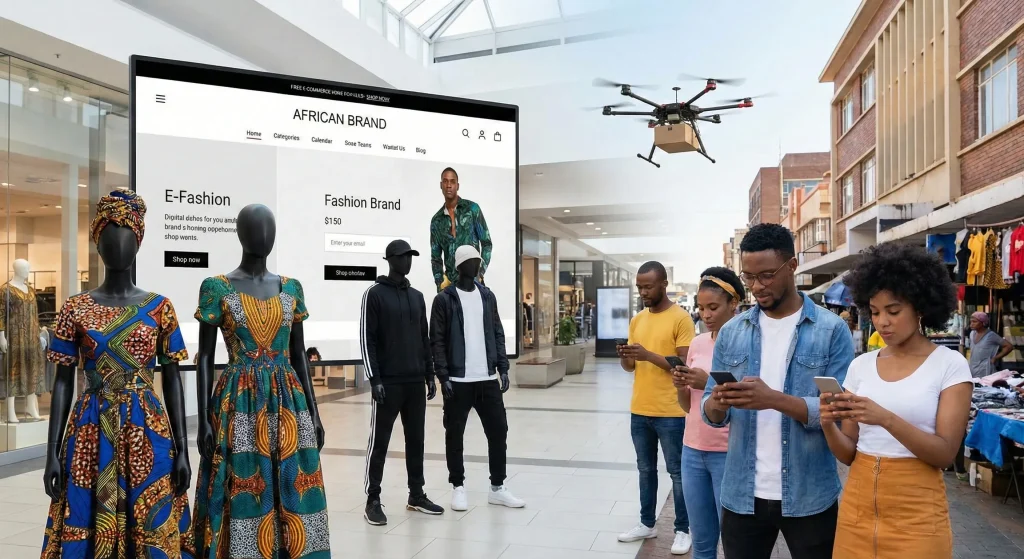
The South African e-commerce market is projected to show significant growth, with fashion being a primary driver. According to authoritative sources like Statista, the user penetration in the e-commerce market is expected to hit over 40% by 2025. This is fueled by a young, tech-savvy population and the proliferation of affordable smartphones.
Key Data Points Defining the Landscape:
- Mobile-First is Mobile-Only: For a significant portion of the SA population, the smartphone is the primary, and often only, access point to the internet. An e-commerce strategy that is not “mobile-first” is fundamentally flawed.
- The Rise of Social Commerce: Platforms like Instagram and TikTok are not just for discovery; they are becoming direct sales channels. The integration of shopping features within these apps is shortening the path to purchase.
- Trust and Security: While digital adoption is growing, trust in online payments and delivery remains a critical factor. Brands must prioritize secure payment gateways and transparent logistics to build consumer confidence.
This landscape presents a unique opportunity for brands to leapfrog traditional retail models and build direct-to-consumer (DTC) relationships that are both high-margin and data-rich.
Section 2: Mapping the Competitive Terrain
The South African fashion market is a complex ecosystem with distinct tiers of competition. Understanding where a brand sits within this spectrum is crucial for developing an effective e-commerce strategy.
The Global Icons
International powerhouses like Nike, Adidas, Louis Vuitton, and Gucci have set the global standard for e-commerce. Their platforms are characterized by seamless UX, personalized recommendations, and robust loyalty programs. They leverage their immense brand equity to drive direct sales, bypassing local intermediaries.
They set the benchmark for brand desirability and digital user experience (UX). Their challenge in SA is typically logistical localization rather than demand generation.
- Luxury Houses (Louis Vuitton, Gucci): These brands maintain high-touch digital storefronts that serve primarily as catalogues for physical boutiques in high-end locations like Sandton City. Their e-commerce functionality is often secondary to the exclusive in-store experience, targeted at the ultra-high-net-worth individual.
- Reference: Gucci (DBpedia), Louis Vuitton (Wikipedia)
- Global Sportswear (Nike, Adidas, Puma): These brands have successfully penetrated the SA market by blending global brand power with localized digital marketing. Their direct-to-consumer (DTC) channels are robust, offering access to limited drops that appeal to SA’s strong sneaker culture. They set the standard for mobile UX in the region.
- Reference: Nike, Inc. (Wikipedia), Adidas (DBpedia)
The Major Local Retailers and Pure-Plays
These entities form the backbone of SA fashion retail, handling the highest volume of transactions.
- The Omnichannel Titans (Woolworths, Edgars, The Fix, Hi-Tec): These legacy retailers have had to aggressively pivot to digital. Woolworths leads by integrating its high-quality food and fashion offering into a single app, leveraging its extensive physical footprint for efficient click-and-collect logistics, a critical advantage in SA. Edgars is in a rebuilding phase, attempting to regain market share through revitalized digital storefronts. Brand houses like Hi-Tec leverage their heritage in the SA outdoor lifestyle to drive online sales.
- The Digital Pure-Play (Superbalist): Superbalist (part of the Takealot group) is the undisputed leader in multi-brand fashion e-commerce in SA. Their dominance is built on a massive inventory, aggressive digital marketing, and, crucially, mastering internal logistics to offer reliable delivery across the country. They act as the primary digital shelf for many international brands lacking their own SA DTC infrastructure.
The Rise of Local Designers & Kasi Brands
This is where the Designtalks thesis differentiates from standard market analyses. The most dynamic growth and cultural relevance in SA fashion are not occurring in shopping malls, but in the township (Kasi) economies.
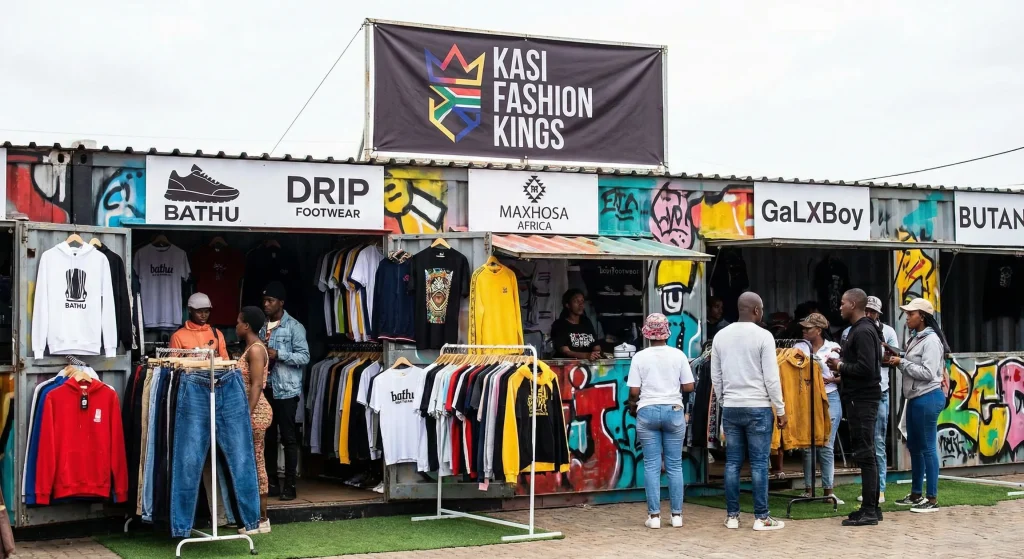
The “Kasi” brand phenomenon is rooted in authentic storytelling, community pride, and streetwear aesthetics. Historically, these brands relied on word-of-mouth, pop-up stalls, and direct social media messaging (WhatsApp/Instagram DM) for sales—a high-friction, unscalable model.
The current strategic imperative is the digitization of this economy. We are witnessing a migration of these brands from informal social commerce to structured e-commerce platforms like Shopify, allowing them to scale beyond their geographical limitations.
The Kasi and Independent Vanguard (The Critical 10+)
These brands represent the future of localized SA fashion e-commerce. Their success depends not just on product, but on translating their intense community loyalty into digital conversion.
- Bathu: Perhaps the most significant success story, transforming a local sneaker brand into a national powerhouse with a robust e-commerce presence and physical retail footprint. Their digital narrative focuses on the “Walk Your Journey” ethos.
- Drip Footwear: Another major sneaker player that utilized aggressive social media marketing and influencer seeding to build massive demand before establishing a formal e-commerce channel.
- Tshepo Jeans: A premium denim brand telling the story of African luxury. Their e-commerce platform caters to a higher price point, emphasizing craftsmanship and heritage.
- Grade Africa: Blending African heritage with contemporary streetwear aesthetics. Their online presence is heavily content-driven, often linking product drops to cultural events.
- Thesis Lifestyle: A Soweto-based pioneer combining streetwear with cycling culture and community activism. Their digital presence is an extension of their physical community hub.
- Siko Republik: Focuses on modernizing traditional African aesthetics for contemporary wear, utilizing e-commerce to reach a diaspora audience as well as locals.
- Styla Gang Original Designs (SGOD): A staple in Soweto streetwear, known for bold graphics and color. Their transition to e-commerce allows them to service demand outside of Gauteng.
- Loxion Kulca: A legacy brand that defined early 2000s Kasi style, currently undergoing a digital revival to reconnect with a nostalgic older demographic and capture a new youthful audience.
- Ama Kip Kip: Another foundational streetwear brand known for its vibrant branding, leveraging e-commerce to maintain relevance in a crowded market.
- Ntozinhle Accessories: A brand that scales traditional beadwork and accessories through a polished online store, showcasing how niche craft can achieve commercial scale digitally.
- Good Clothing: (As mentioned in prompt) A strong local designer representative of the broader independent design movement leveraging platforms like Instagram for direct sales.
- S.W.A.N.K (Street Wear and Kicks): An emerging brand focusing on the intersection of sneaker culture and apparel.
These brands have proven that authentic, locally-rooted narratives can command significant market share and brand loyalty, often outperforming international competitors in cultural relevance.
Section 3: The Core E-commerce Strategic Framework
To succeed, SA fashion brands must move beyond basic online stores and build a robust, scalable e-commerce ecosystem. This requires a strategic approach to technology, operations, and customer experience.
1. Platform Selection: The Digital Foundation
The choice of e-commerce platform dictates your scalability, customization capabilities, and total cost of ownership.
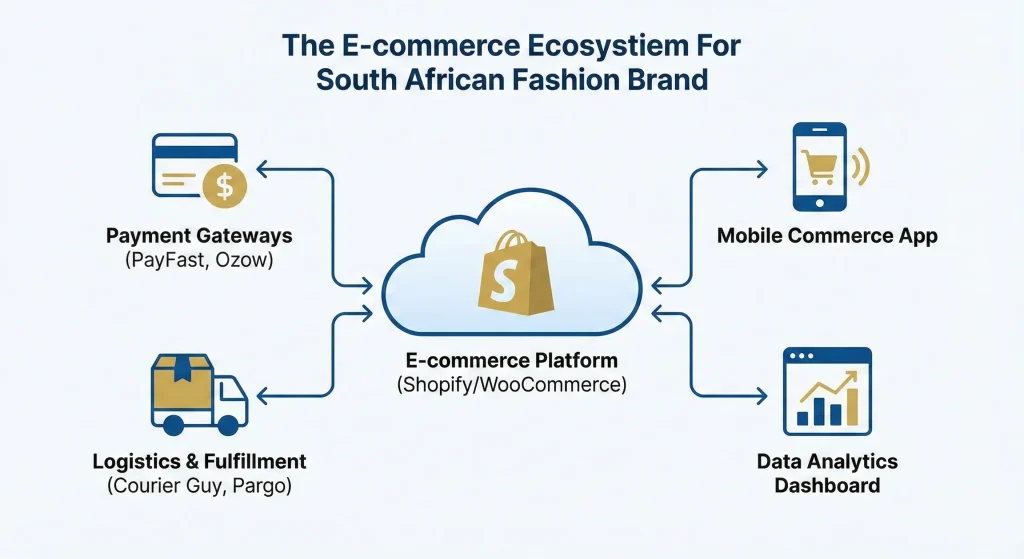
- Shopify: The dominant choice for many SA brands due to its ease of use, robust app ecosystem, and reliable hosting. It is ideal for small to medium-sized businesses (SMBs) and even larger brands looking for a quick go-to-market strategy.
- WooCommerce: A powerful, customizable plugin for WordPress. It offers greater control and ownership of data but requires more technical maintenance. It is a strong choice for brands with existing WordPress sites or specific customization needs.
- Magento (Adobe Commerce): An enterprise-grade solution for large retailers with complex product catalogs and high transaction volumes. It requires significant investment in development and infrastructure.
2. UX/UI Principles for the SA Consumer
The user experience must be tailored to the local context.
- Mobile Optimization is Non-Negotiable: The site must load quickly and be intuitive on all smartphone screen sizes. “Thumb-friendly” navigation is critical.
- Localized Content & Imagery: Use South African models, settings, and language that resonate with the target audience.
- Simplified Checkout: Minimize the number of steps to complete a purchase. Offer guest checkout options to reduce friction.
3. Payment Gateways & Fintech Integration
Offering secure and preferred payment methods is crucial for conversion.
- Card Payments: Integrate with trusted local gateways like PayFast, Peach Payments, or Yoco to accept credit and debit cards.
- Instant EFT: Services like Ozow have revolutionized online payments in SA, allowing customers to pay directly from their bank accounts securely and instantly. This is a must-have for accessing customers without credit cards.
- Buy Now Pay Later (BNPL): Integrating services like Payflex or MoreTyme can significantly increase average order value (AOV) by allowing customers to pay in installments.
4. Logistics and Fulfillment Network: Solving the “Last Mile”
Reliable delivery is the backbone of e-commerce trust.
- Courier Partnerships: Partner with reputable courier companies like The Courier Guy, Dawn Wing, or Aramex.
- Click-and-Collect: For brands with physical stores, this is a powerful omnichannel strategy that saves on shipping costs and drives foot traffic.
- PUDO (Pick Up Drop Off) Lockers: Utilizing locker networks like those from Pargo or The Courier Guy provides a convenient and secure delivery option, especially in areas where home delivery is challenging.
Mobile UX Optimization and PWA Deployment:
- Speed is the primary currency.
- Strategic Requirement: Utilizing Progressive Web Apps (PWAs) to provide an app-like experience without the friction of app store downloads. Image optimization and lazy loading are critical technical implementations to respect user data constraints.
The “Social-to-Shop” Conversion Funnel:
- For Kasi and independent brands, the audience lives on social media.
- Strategic Requirement: Seamless integration of social commerce tools (Instagram Shopping, TikTok Shop) that lead directly to a friction-free mobile checkout. The gap between “liking” a post and completing a purchase must be minimized to absolute zero.
Section 4: Digital Marketing & Brand Authority
Building the platform is only the first step; driving qualified traffic and building brand authority is an ongoing battle.
- SEO for SA Fashion: Optimize product pages with localized keywords. Understand how South Africans search for fashion (e.g., “sneakers” vs. “tekkies”). Leverage voice search optimization as its usage grows.
- Social Commerce & Influencer Strategy: Move beyond vanity metrics. Partner with micro-influencers who have genuine engagement within specific communities. Use Instagram Shopping and TikTok Shop to create a seamless path to purchase.
- Content Strategy & Storytelling: In a crowded market, your story is your differentiator. Use blogs, videos, and social content to tell the story of your brand, your designers, and your community. This builds emotional connection and loyalty.
Section 5: The Future of SA Fashion E-commerce
The future will belong to brands that innovate and provide immersive digital experiences.
- Artificial Intelligence (AI): AI will power hyper-personalized product recommendations, chatbots for customer service, and predictive analytics for inventory management.
- Augmented Reality (AR) Try-Ons: This technology is moving from novelty to utility. Allowing customers to virtually “try on” clothes, shoes, or accessories significantly reduces return rates and increases confidence in purchase.
- Sustainability as a Core Value: SA consumers are becoming more conscious of ethical fashion. Brands that transparently communicate their sustainable practices will gain a competitive advantage.
- Acquisition of Kasi Brands: Major players like Superbalist or traditional retailers like TFG (The Foschini Group) will likely begin acquiring successful Kasi brands to integrate their authentic cultural cachet into their broader portfolios.
- The Rise of Niche Marketplaces: We expect to see platforms emerging that specifically curate local, independent, and Kasi brands, providing a unified storefront that rivals the scale of Superbalist but maintains a specialized focus, similar to global platforms like Etsy but for SA fashion.

Conclusion: The Time to Act is Now
The South African fashion landscape is being rewritten by digital forces. The window of opportunity to establish a dominant position is open, but it is closing. For established brands, the challenge is to pivot with agility. For emerging brands, the challenge is to scale with strategic precision.
By adopting the frameworks outlined in this white paper—prioritizing a mobile-first UX, integrating local payment solutions, building a reliable logistics network, and telling an authentic brand story—SA fashion brands can not only survive but thrive in the digital age. Designtalks stands ready to partner with forward-thinking brands to navigate this journey and define the future of African fashion e-commerce.
Frequently Asked Questions (FAQs)
- What is the best e-commerce platform for a new South African fashion brand? For most new brands, Shopify is recommended due to its user-friendly interface, lower upfront costs, and extensive app marketplace that integrates easily with local payment gateways and couriers.
- How crucial are Instant EFT payment options like Ozow for SA e-commerce? They are critical. A significant portion of the South African population does not possess a credit card but has a bank account. Instant EFT provides a secure and immediate payment method for this large demographic, directly boosting conversion rates.
- What is the biggest challenge in South African fashion e-commerce? Logistics, specifically the “last mile” delivery to diverse and sometimes hard-to-reach areas, remains a major challenge. Building trust through reliable, transparent, and timely delivery is essential.
- How can local “kasi” brands compete with global giants online? By leveraging their unique selling proposition: authenticity, community connection, and cultural relevance. Their storytelling and direct engagement with their audience on social media platforms are powerful tools that global brands struggle to replicate.
- Is investing in a mobile app necessary for a fashion brand? While a mobile-optimized website is non-negotiable, a dedicated mobile app can be a powerful tool for building loyalty, sending push notifications, and offering a more personalized experience, especially for established brands with a high repeat purchase rate.
- What role does social media play in the e-commerce strategy? It’s no longer just a top-of-funnel marketing channel; it’s a sales channel. Platforms like Instagram and TikTok are moving towards integrated shopping experiences (social commerce), where discovery and purchase happen seamlessly within the app.


