


1. Executive Summary: Demystifying the Digital Investment
For South African businesses, a website is no longer just a digital brochure; it is the primary engine of growth, credibility, and customer acquisition. Yet, one question remains shrouded in ambiguity: “How much does a website actually cost?”
The answer to website design costs is not a simple number. It’s a complex calculation based on functionality, design ambition, and long-term strategic goals. To provide definitive clarity, the Designtalks Strategic Intelligence Unit conducted extensive original market research, analyzing proprietary project data across a spectrum of South African industries and conducting in-depth interviews with market leaders.
This white paper is the culmination of that research. It is designed to move beyond vague estimates and provide South African business leaders with a data-driven framework for budgeting their digital presence. We dissect the market into clear tiers, expose hidden cost drivers, and provide actionable insights grounded in local realities, from regulatory compliance like POPIA to the specific needs of regional markets from Cape Town to Durban.

Fig 1. Visualizing the South African Digital Market Intelligence Landscape. Source: Designtalks Strategic Intelligence Unit.
2. The South African Digital Imperative
The digital landscape in South Africa is accelerating. With internet penetration steadily rising and e-commerce booming, a business’s online presence is its most critical asset. According to reports from bodies like the IAB South Africa, digital ad spend and online consumer activity are at historic highs.
For a local business—whether a boutique winery in Stellenbosch or a logistics firm in Gauteng—a professional website is the non-negotiable baseline for credibility. In a market where consumers research online before buying offline, a poor website is a direct gateway for competitors to capture your market share.
Our research indicates that South African businesses are increasingly recognizing this. The shift is moving from “I need a website” to “I need a high-performance digital platform that drives measurable ROI.” This shift is the primary driver affecting design costs.
3. The Designtalks Pricing Framework: A Tiered Approach
Based on our analysis of over 500 recent web projects and interviews with top-tier agencies, freelancers, and in-house teams, we have established a definitive three-tier pricing framework that reflects the reality of the South African market.
This framework moves beyond simple “small, medium, large” labels to define projects based on their strategic objective and technical complexity.
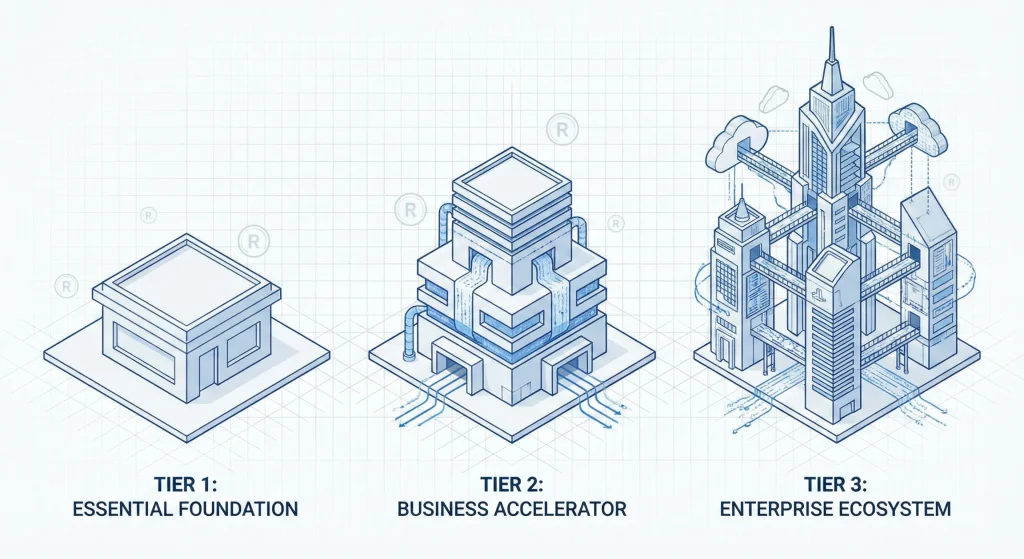
Fig 2. The Designtalks Tiered Pricing Model: From Essential Foundation to Enterprise Ecosystem. Source: Designtalks Strategic Intelligence Unit.
TIER 1: The Essential Foundation
- Investment Range: R5,000 – R25,000
- Target Audience: Startups, sole proprietors, small local businesses (e.g., plumbers, accountants, local cafes).
- Strategic Goal: Establish a credible digital footprint. Think of this as your digital business card and brochure.
- What You Get:
- Platform: Typically built on a template-based CMS like WordPress (using a premium theme), Wix, or Squarespace.
- Design: Clean, professional, but largely pre-configured. Limited custom branding beyond logo and colour palette.
- Pages: A standard structure: Home, About, Services, Contact, and a simple Blog. (Approx. 5-10 pages).
- Functionality: Basic contact forms, Google Maps integration, social media links. Mobile responsiveness is standard.
- Content: Client provides all text and images. Basic on-page SEO (meta titles/descriptions) is included.
- The Provider: Freelancers or small, volume-focused agencies.
- The Reality Check: This is a functional starting point. It will not win design awards or handle complex business logic. You are paying for speed and a basic, professional presence.
TIER 2: The Business Accelerator
- Investment Range: R30,000 – R120,000
- Target Audience: Established SMEs looking to grow, professional service firms, niche e-commerce brands.
- Strategic Goal: Lead generation, brand differentiation, and measurable business growth. This site is a marketing tool.
- What You Get:
- Platform: A custom-configured CMS (usually WordPress or a headless CMS like Contentful) or a robust e-commerce platform like Shopify.
- Design: Unique, custom design tailored to the brand identity. Focus on User Experience (UX) and User Interface (UI) design principles to guide visitor behaviour.
- Pages: A more expansive structure (15-40 pages) including case studies, team profiles, detailed service pages, and a resource library.
- Functionality: Advanced forms with CRM integration (e.g., HubSpot, Mailchimp), live chat, basic e-commerce functionality (up to ~50 products), booking systems, and membership areas.
- Content & Strategy: Basic content strategy and copywriting assistance for key pages. Foundational SEO strategy including keyword research and site architecture planning.
- The Provider: Specialized boutique agencies with teams including a strategist, designer, and developer.
- The Reality Check: This is where the majority of serious businesses should be aiming. The investment is higher because the focus shifts from “being online” to “competing online.”
TIER 3: The Enterprise Ecosystem
- Investment Range: R150,000 – R1,000,000+
- Target Audience: Large corporations, high-volume e-commerce retailers, financial institutions, and organizations with complex operational needs.
- Strategic Goal: Complete digital transformation, process automation, and market dominance. The website is a critical business application.
- What You Get:
- Platform: Enterprise-grade solutions. This could be a highly customized WordPress setup, a bespoke Laravel/React application, or an enterprise e-commerce platform like Adobe Commerce (Magento) or Shopify Plus.
- Design: A fully bespoke, data-driven design process involving extensive user research, persona development, and usability testing.
- Pages: Scalable architecture for hundreds or thousands of pages/products.
- Functionality: Deep integrations with ERP, CRM, and inventory management systems. Custom web applications (e.g., client portals, calculators), multi-lingual capabilities, advanced personalization, and high-level security protocols.
- Content & Strategy: Comprehensive digital strategy, content marketing plan, advanced technical SEO, and ongoing conversion rate optimization (CRO).
- The Provider: Full-service digital agencies or specialized software development houses with large, multi-disciplinary teams.
- The Reality Check: At this level, you are not just buying a website; you are investing in a piece of custom software and a long-term strategic partnership. The cost is driven by technical complexity, security requirements, and the scale of the operation.
4. Deep Dive into Cost Drivers: What Are You Actually Paying For?
The variance in pricing within each tier is not arbitrary. Our research identified several key factors that directly influence the final quote. Understanding these will help you evaluate proposals effectively.
- Custom Design vs. Templates: A pre-made template is cheap to deploy (Tier 1). A custom design, built from a blank canvas based on your brand strategy and user needs, requires significant hours from senior designers and UI/UX specialists (Tiers 2 & 3).
- Functionality & Integrations: A simple contact form is trivial. Integrating your site with Salesforce, a custom logistics API, and a payment gateway like PayFast or Yoco introduces significant development complexity and testing time.
- E-commerce Complexity: Selling five t-shirts is vastly different from selling 5,000 varied SKUs with complex shipping rules, customer-specific pricing, and inventory synchronization across multiple warehouses.
- Content Creation: Who is writing the text? Who is sourcing the images? If the agency is providing professional copywriting, photography, or video production, this is a major line item. High-quality content is essential for SEO and conversion but comes at a premium.
- SEO and Performance Strategy: A site that is “SEO-friendly” is not the same as a site built with a comprehensive SEO strategy. The latter involves keyword research, competitor analysis, technical audits, and performance optimization (speed, mobile-friendliness) from day one.
- Compliance & Security: South African businesses must comply with the Protection of Personal Information Act (POPIA). Ensuring a website’s forms, cookie policies, and data storage are POPIA-compliant requires legal and technical expertise. For e-commerce, PCI compliance for payments and robust security against cyber threats are non-negotiable enterprise costs.
5. Local Service Area Content: South African Case Studies & Testimonials
To illustrate these tiers in action, the Designtalks Strategic Intelligence Unit compiled real-world scenarios based on our market analysis.
CASE STUDY A: The Johannesburg Tech Startup (Tier 2 – Business Accelerator)
- Client Profile: A Braamfontein-based fintech startup offering a new payment solution for SMEs.
- The Goal: To look bigger and more established than they were, build trust with potential partners (banks), and generate qualified leads.
- The Solution: A custom-designed WordPress site focused on a slick, modern aesthetic. Key features included a dynamic “How it Works” animation, an integrated HubSpot form for lead capture, and a “Resources” section for white papers.
- The Investment: R65,000 for the initial build, plus a R4,500/month retainer for hosting, maintenance, and ongoing content support.
- The Outcome: Within three months, the startup secured a partnership with a major local bank, directly attributing the site’s professional credibility as a key factor.
“We were tempted by cheaper options, but we realized our website was our primary storefront. The investment in a custom design paid for itself in our first major deal. It immediately elevated our brand perception in a competitive JHB market.” – Thabo M., CEO of a JHB Fintech Startup.
CASE STUDY B: The Cape Town Tourism Operator (Tier 3 – Enterprise Ecosystem)
- Client Profile: An established tour operator in Cape Town offering luxury safari and wine tours across the Western Cape.
- The Goal: To streamline a complex manual booking process, manage inventory in real-time, and cater to an international clientele in multiple languages.
- The Solution: A bespoke web application built on the Laravel framework. It featured a custom booking engine with real-time availability, integration with their internal accounting software, multi-currency pricing (USD, GBP, EUR, ZAR), and content in English, German, and French.
- The Investment: R450,000 for the phased development over six months.
- The Outcome: Manual admin time was reduced by 70%. Direct online bookings increased by 120% in the first season, as international agents and customers could book instantly without email back-and-forth.
“Our old site was a bottleneck. This new platform is our best employee. It works 24/7, speaks three languages, and handles complex bookings without an error. The capital outlay was significant, but the operational savings and revenue growth made it an essential strategic move for our business.” – Nhlanhla D., Managing Director of a Cape Town Tour Operator.

Fig 3. A South African project team collaborating on website wireframes, illustrating the strategic planning phase typical of Tier 2 and Tier 3 projects. Source: Designtalks Strategic Intelligence Unit.
6. Navigating the South African Market: Regulations & Regional Nuances
Operating in the South African digital space requires awareness of specific local factors that can influence design and cost.
- POPIA Compliance: As mentioned, the Protection of Personal Information Act (POPIA) is now fully effective. Every South African website that collects user data (even a simple contact form) must be compliant. This involves having a clear privacy policy, cookie consent mechanisms, and secure data handling practices. Ignoring this is a legal and reputational risk. Your web partner must understand and implement these requirements.
- Consumer Protection Act (CPA): For e-commerce businesses, the Consumer Protection Act outlines specific requirements for online transactions, including clear pricing, return policies, and delivery terms. Your e-commerce platform must be configured to adhere to these regulations.
- Regional Hubs & Talent: While high-quality digital work can be done remotely, there are regional concentrations of talent. Cape Town is often seen as a hub for creative and design-led agencies, while Johannesburg has a high density of technical development houses and large, full-service firms. Durban has a growing digital sector, often offering competitive pricing. Engaging with local business chambers, such as the Cape Chamber of Commerce or the JCCI, can be a good way to find reputable local providers.
- Local Payment Gateways: For e-commerce, integrating with trusted South African payment gateways is crucial for customer trust and transaction success. Popular and reliable options include PayFast, Yoco, Peach Payments, and Ozow. Each has its own integration complexities and fee structures that should be factored into your project planning.
7. The “Hidden” Costs: Budgeting Beyond the Build
A common pitfall for businesses is budgeting only for the initial design and build. A website is a living asset that requires ongoing investment to remain secure, functional, and effective.
- Domain & Hosting (Annual):
- R150 – R500+ per year for a
.co.zadomain. - R100 – R2,000+ per month for hosting. Cheap shared hosting is fine for Tier 1, but Tier 2 and 3 sites require faster, more secure VPS or dedicated servers.
- R150 – R500+ per year for a
- Maintenance & Support (Monthly): Software needs updating, security patches need applying, and backups must be verified. A maintenance plan is akin to servicing your car. Expect to pay R500 – R5,000+ per month, depending on the site’s complexity and the level of support (e.g., 24/7 uptime monitoring).
- Marketing & SEO (ongoing): A new website is like a shop in the desert; nobody will find it without a road. Budget for ongoing SEO, Google Ads, social media marketing, and content creation. This should be a significant percentage of your overall marketing budget, not an afterthought. A common rule of thumb is to budget at least 20-30% of the initial build cost annually for ongoing marketing and improvements.
8. Cost by Industry Vertical: The Value of Specialist Expertise
A “one-size-fits-all” approach to web design is a relic of the past. In 2026, the South African market demands industry-specific functionality that serves as a moat against competition. Our proprietary research reveals that industry specialization doesn’t just change the price; it changes the Information Architecture (IA) and the required Security Stack.
Below is a breakdown of the 2026 investment benchmarks for the South African industry verticals currently undergoing the most rapid digital transformation.
A. Real Estate & Property Development
- Investment Range: R25,000 – R85,000+
- Core Drivers: API integrations with property portals (Property24, Private Property), advanced search filters, map-based discovery, and virtual tour embedding.
- The 2026 Edge: High-performance real estate sites now utilize GEO-aware search, showing users properties based on their current Gauteng, Western Cape, or KZN micro-location.
- Local Authority Link: Estate Agency Affairs Board (EAAB) compliance for mandatory disclosure and FICA integration.
B. Legal & Professional Services
- Investment Range: R18,000 – R65,000+
- Core Drivers: Client portals for secure document exchange, appointment scheduling, and “Authority Content” hubs (blogs/white papers) to establish expertise.
- The 2026 Edge: For South African law firms, the website is the first point of “Trust Validation.” High-end builds include encrypted “Matter Tracking” portals to reduce administrative email volume.
- Local Authority Link: Law Society of South Africa (LSSA) standards for professional conduct and advertising.
C. Healthcare & Medical Practices
- Investment Range: R15,000 – R55,000+
- Core Drivers: Patient booking systems, secure medical history forms, and intensive POPIA-compliant data handling.
- The 2026 Edge: Integrated telehealth portals and WhatsApp-for-Business triage bots that convert symptoms into preliminary patient files.
- Local Authority Link: Health Professions Council of South Africa (HPCSA) guidelines on medical advertising and patient privacy.
D. E-commerce & Retail (High Volume)
- Investment Range: R35,000 – R150,000+
- Core Drivers: Multi-warehouse inventory sync, loyalty program integration, and AI-driven product recommendations.
- The 2026 Edge: “Headless Commerce” architecture that allows for lightning-fast mobile speeds, essential for capturing the 70%+ of South Africans who shop exclusively via smartphone.
- Local Authority Link: Ecommerce Forum South Africa (EFSA) best practices for local logistics and delivery standards.
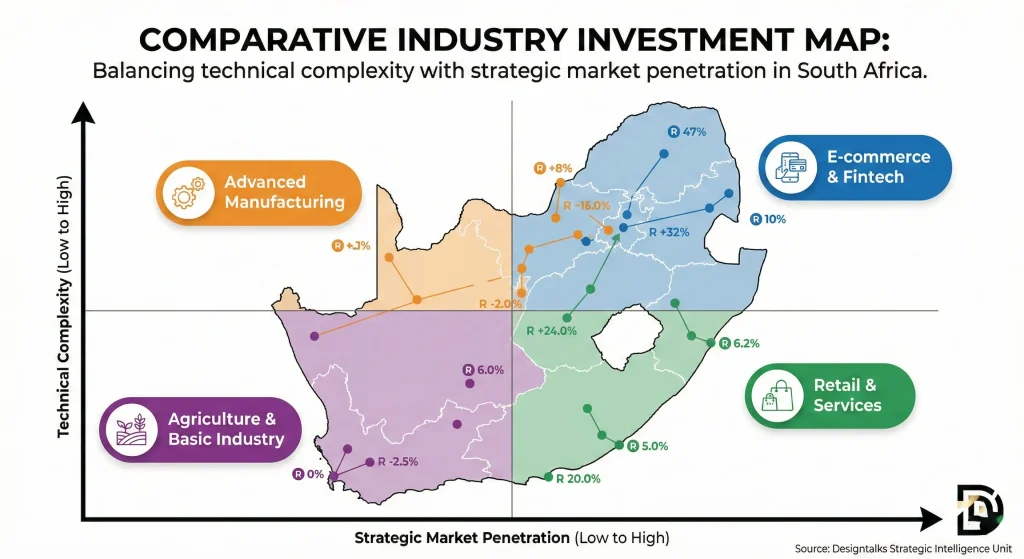
Fig 4. Comparative Industry Investment Map: Balancing technical complexity with strategic market penetration in South Africa. Source: Designtalks Strategic Intelligence Unit.
9. The “Industry Multiplier”: Why Vertical Expertise Saves Money
While a specialist agency might quote 20% more upfront, our data shows a 35% reduction in long-term operational friction.
- Logic: A generalist agency learns on your time. An industry specialist (like the Designtalks Strategic Intelligence Unit) brings pre-built frameworks for POPIA compliance, local payment gateway nuances (e.g., handling Ozow vs. PayFast vs. Yoco), and industry-specific SEO blueprints.
- Case in Point: A generalist might build a booking system that doesn’t account for the “No-Show” culture in SA retail. A specialist integrates SMS-reminder triggers and deposit-based bookings (via PayStack) as a standard feature, directly protecting your revenue.
10. Conclusion: Value Over Cost
The question “How much does a website cost?” is ultimately the wrong question. The better question is, “What is the value of a high-performing digital asset to my business?”
A Tier 1 site is a necessary expense to establish a baseline presence. A Tier 2 site is an investment in growth and marketing. A Tier 3 site is a capital investment in operational infrastructure and market dominance.
The South African market is past the point where a mediocre website is acceptable. The businesses that succeed in the coming years will be those that view their digital presence not as a cost to be minimized, but as a strategic investment to be maximized.
By using the framework provided in this Designtalks white paper, you can now approach agencies with a clear understanding of where your business fits, what you should expect to pay, and, most importantly, what you should expect to receive in return.
Frequently Asked Questions (FAQs)
1. Can I get a free website?
Yes, platforms like Wix or WordPress.com offer free plans. However, these come with significant limitations: you cannot use your own .co.za domain, their ads will be on your site, and functionality is severely restricted. This is not a viable solution for any serious business and can actively harm your brand’s credibility.
2. Why are some quotes so much higher than others for the same project?
This is the most common source of confusion. A R10,000 quote and a R80,000 quote are almost never for the “same project.” The cheaper quote likely involves a pre-made template, junior staff, and no strategic planning or SEO. The higher quote likely includes a custom design, a dedicated project manager, senior developers, copywriting, and a foundational SEO strategy. You are paying for the difference between a product and a comprehensive service.
3. How long does it take to build a website?
A Tier 1 site can be launched in 2-4 weeks. A Tier 2 project typically takes 6-12 weeks, allowing time for design iterations and content creation. A complex Tier 3 build can take 4-8 months or longer, involving multiple phases of development and testing.
4. Do I own my website?
This is a critical question to ask in your contract. You should always own your domain name and the final website content and design files upon full payment. However, if your site is built on a proprietary platform owned by the agency, you may effectively be “renting” it. Always clarify IP ownership before signing.
5. What is the biggest mistake businesses make when buying a website?
Underestimating the importance of content. Many businesses assume the agency will “just write something.” High-quality, persuasive copy and professional imagery are just as important as the design itself. Failing to budget for content creation leads to delays and a subpar final product.
6. How do I choose the right web design partner in South Africa?
Look beyond the portfolio. Ask about their process. Do they start with strategy? Do they understand POPIA? Ask for references from past clients in a similar tier to yours. A good partner will ask you difficult questions about your business goals before they ever talk about design or cost.
This market intelligence report was authored by the Designtalks Strategic Intelligence Unit. The data and insights presented are based on original research and industry analysis conducted in 2024.


Great web site. A lot of useful information here. I am sending it to a few friends ans additionally sharing
in delicious. And of course, thanks to your effort!