
Executive Summary: Redefining the South African Digital Problem
The South African digital landscape is a unique ecosystem characterized by extreme mobile dominance, data cost sensitivity, and specific trust barriers. Standard, globally imported digital marketing playbooks routinely fail in this environment. Businesses relying on generic “best practices” for website lead generation are experiencing catastrophic leakage in their sales funnels.
This white paper argues that standard, globalized approaches to lead generation fail in the unique South African context. To maximize lead volume in SA, organizations must adopt a “Category Design” approach, fundamentally restructuring their digital presence around three pillars: hyper-localized technical infrastructure, deeply rooted psychological trust engineering, and rigorous, data-driven Conversion Rate Optimization (CRO).
This document serves as the definitive technical blueprint for achieving this transformation, moving beyond superficial tactics to foundational strategy.
Section 1: The Contextual Foundation: The South African Digital Reality
To engineer a successful lead generation platform, one must first understand the environment in which it operates. South Africa presents a unique dichotomy: a rapidly digitizing populace constrained by infrastructural realities and a profound digital trust deficit.
Section 1: The South African Digital Terrain – A Hostile Environment for Generic Sites
To engineer a solution, one must first understand the environmental constraints. The South African market possesses distinct characteristics that render standard Western web design philosophies obsolete.
1.1 The Mobile-Only Reality vs. Mobile-First Rhetoric
While the global standard is “mobile-first,” South Africa approaches a “mobile-only” reality for a significant portion of lead generation traffic. According to authoritative data on Internet in South Africa, mobile penetration far outpaces traditional desktop infrastructure.
A generic responsive site is insufficient. The Designtalks Protocol demands “Mobile Performance Architecture.” This means designing for high latency networks (3G/LTE variations), older device processing capabilities, and the thumb-zone ergonomics of smaller screens. If a lead cannot complete a form with one hand while standing in a taxi queue, the architecture has failed.
1.2 The Data Economy and Bandwidth Friction
South African consumers are acutely aware of data costs. Websites bloated with unoptimized high-resolution imagery, excessive JavaScript trackers, and auto-playing video constitute “data theft” in the eyes of the user. This creates immediate friction and high bounce rates before the value proposition is even seen. Lead generation in SA requires ruthless efficiency in payload delivery. Every kilobyte transferred must serve the conversion objective.
1.3 The Trust Deficit and Security Perception
The South African digital consumer operates in a high-fraud environment. Skepticism regarding online forms, particularly those asking for personal identifiers, is the default psychological state. Standard trust signals used internationally (generic testimonials, unfamiliar badges) often fail here. Trust needs to be engineered through hyper-local signaling, visible compliance with local regulations, and technical security assurance.
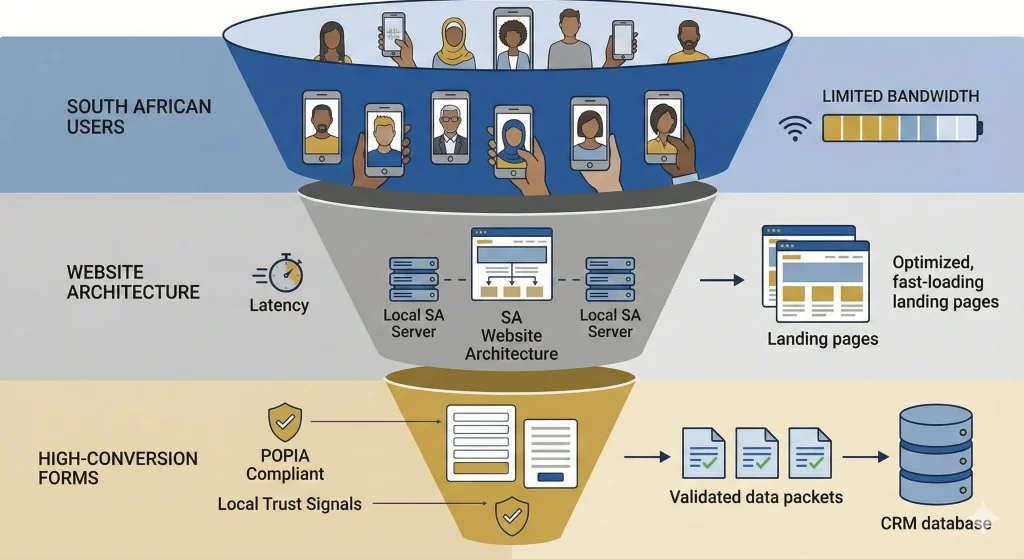
VISUALIZING THE SA FUNNEL
To understand these constraints, consider the visualization below. It maps the journey of a South African user, from their mobile-constrained environment through to the technical and psychological gateways they must pass through to become a lead.
Section 2: Technical Foundations – Engineering for Speed and Indexability
Before psychological persuasion can occur, technical transmission must succeed. In the SA context, technical performance is a primary trust signal. If a site is slow, it is perceived as broken or insecure.
2.1 Core Web Vitals as a Conversion Metric
Google’s Core Web Vitals are not merely SEO metrics; they are user experience quantifiers that directly correlate to lead volume. In SA, Largest Contentful Paint (LCP) is critical due to network variance.
The Designtalks Protocol mandates:
- Server-Side Rendering (SSR) or Static Site Generation (SSG): Moving away from client-heavy JavaScript frameworks for initial loads. The browser should receive pre-rendered HTML to ensure immediate visibility.
- Aggressive Image Optimization: Utilizing next-gen formats (WebP, AVIF) with mandatory responsive sizing attributes to ensure a mobile device never downloads desktop-sized assets.
- Code Splitting and Tree Shaking: Eliminating unused CSS and JavaScript. The browser should only download the code necessary for the current view.
2.2 Technical SEO and Localized Indexing
To get leads, the site must first be visible to locally relevant intent. This requires communicating with search engines in their preferred technical language.
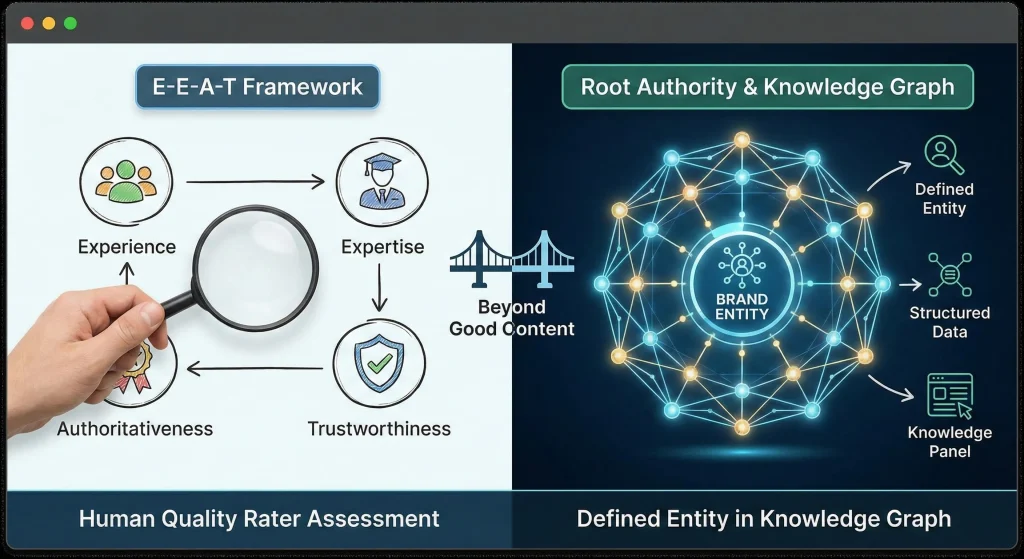
- Structured Data (Schema Markup): We must move beyond basic HTML. We utilize JSON-LD structured data to explicitly tell search engines what the business is, what services it offers, and exactly where it operates. This is crucial for capturing “near me” queries and appearing in rich snippets. We reference the DBpedia ontology for Organization to ensure semantic clarity.
- Hreflang and Localization: Even within English-speaking SA, nuance exists. Ensuring search engines understand the geographic targeting of the content prevents it from competing irrelevantly with global content.
2.3 Security as a Conversion Metric
Beyond the green padlock (HTTPS), which is now a baseline requirement, advanced security measures should be subtly communicated to the user, especially in B2B or high-ticket B2C transactions.
- Using secure, recognizable local payment gateways if transactions occur on-site.
- Displaying security auditing seals that are recognized within the SA IT landscape.
Security is often viewed as an IT concern, but in lead generation, it is a marketing asset.
- SSL Certificates (HTTPS): A non-negotiable baseline. Browsers flag non-secure sites, instantly destroying trust.
- POPIA Compliance: The Protection of Personal Information Act (POPIA) is South Africa’s data privacy law. Explicitly stating compliance and linking to a clear privacy policy on every lead capture form is not just a legal requirement; it is a powerful trust signal that reassures users their data is safe.
Section 3: Conversion Rate Optimization (CRO) – The Psychology of the SA User
Once traffic is stabilized on a technically sound platform, the focus shifts to psychological engineering. CRO is the science of reducing friction and increasing motivation.
3.1 The Economy of Attention and the Value Proposition
In the SA market, users are often multitasking or in transit. The website has seconds to articulate its value proposition. The “hero section” above the fold must answer three questions immediately:
- What is this?
- Is it relevant to my immediate problem in South Africa?
- What is the single action I need to take next?
Ambiguity is the enemy of conversion. Abstract headlines must be replaced with direct, benefit-driven statements.
3.2 Form Architecture and Radical Simplification
The lead capture form is the critical juncture of the entire system. In SA, long forms kill conversion rates. The Designtalks Protocol advocates for “Progressive Disclosure” in data capture.
- Step 1: Micro-Commitment: Ask only for the absolute minimum information needed to initiate contact (often just a name and phone number or email).
- Step 2: Enrichment (Optional): Once the user has committed to the first step, they are psychologically more likely to provide further details on a subsequent screen if it aids the service delivery.
Every additional field decreases conversion probability by a measurable percentage. We treat form fields as “cost” to the user.
3.3 Localized Social Proof and Authority
Testimonials from “John Smith in New York” are irrelevant in Johannesburg. Trust signals must be geo-specific.
- Hyper-local case studies: Showcasing success stories recognizable to the SA demographic or business sector.
- Local Accreditations: Displaying membership to South African industry bodies (e.g., specific regulatory boards) carries far more weight than generic international badges.
Once the technical foundation is solid, the focus shifts to the psychological engineering of the user experience. You must bridge the trust deficit.
- Localized Trust Signals: Generic trust signals fail. You need SA-specific indicators.
- Local Contact Info: A “+27” phone number (preferably a landline like 011 or 021) and a physical South African address are powerful verifiers of legitimacy.
- SA Accreditation: Display badges from recognized local industry bodies (e.g., The Estate Agency Affairs Board, The Engineering Council of South Africa, etc.). These carry far more weight than generic international awards.
- Language and Tone: Business English in SA is professional yet accessible. Avoid overly Americanized sales language. The tone should be respectful, direct, and solution-oriented, reflecting local business culture.
- The Art of Frictionless Forms: The lead capture form is the critical juncture. Every field added decreases the conversion rate. In an SA context on mobile, this effect is magnified. Only ask for essential information (Name, Email, Phone Number). Progressive profiling can be used to gather more data later.
Section 4: Trust Engineering and Regulatory Compliance (POPIA)
In South Africa, regulatory compliance is not just a legal hurdle; it is a primary trust vector. The Protection of Personal Information Act (POPIA) has changed the landscape of lead generation.
4.1 POPIA as a Competitive Advantage
Many SA businesses view POPIA as a hindrance. The Designtalks Protocol views it as a differentiator. By visibly and clearly adhering to POPIA, a website signals sophistication and trustworthiness that competitors lack.
- Explicit Consent Mechanisms: Moving beyond generic cookie banners to clear, granular consent options for data processing. The user must feel in control of their data.
- Transparent Privacy Policy: The privacy policy should be accessible, written in plain language (not legalese), and clearly state how lead data will be used. If you are going to call them, say so. If you are going to email them a newsletter, say so.
4.2 The Mechanics: The Science of Conversion Rate Optimization (CRO)
Conversion Rate Optimization (CRO) is the systematic process of increasing the percentage of website visitors who take a desired action. In SA, this must be approached scientifically.
- Defining Micro vs. Macro Conversions: A macro conversion is the primary lead capture (form submission). Micro conversions are the steps leading to it (e.g., downloading a brochure, viewing the pricing page, clicking “read more”). You must optimize the entire chain of micro-conversions to maximize the final macro-conversion.
- A/B Testing for SA Traffic Volumes: South African websites often have lower traffic volumes than international counterparts. Statistical significance in A/B testing can take longer to achieve. Therefore, testing should focus on high-impact changes—headlines, primary Call-to-Action (CTA) button text, and offer framing—rather than minor aesthetic tweaks.
- Localized Calls-to-Action (CTAs): CTAs must be specific and value-driven. Instead of a generic “Submit,” use “Get My Quote in Rands,” “Book a Consultation in Sandton,” or “Download SA Industry Report.” This signals relevance and reduces anxiety.
VISUALIZING SA UX: FRICTION VS. FLOW
The diagram below illustrates the psychological impact of form design on South African mobile users. It contrasts a high-friction, low-conversion approach with an optimized, low-friction UX designed for the local market.
Section 5: The Fuel: The Content-to-Lead Nexus
Content is the magnet that attracts traffic, but it must be designed to convert.
- Addressing Local Pain Points: Content must speak directly to South African challenges. For example, a B2B software company should write about “Navigating SA’s unique regulatory compliance challenges” rather than generic business efficiency.
- Local Case Studies vs. International Examples: A case study featuring a recognizable South African brand carries exponential weight compared to an international example. It provides “social proof” within the local context.
- SEO Strategy: Hyper-Local Intent: Keyword strategy must move beyond generic terms. Focus on long-tail keywords with local intent, such as “[Service Name] in Cape Town,” “Best [Product] suppliers Gauteng,” or “ZAR pricing for [Software].”
Conclusion: The Paradigm Shift
Generating leads from a website in South Africa is not a matter of luck or superficial design. It is a discipline of engineering. It requires a paradigm shift from viewing a website as a passive digital brochure to an active, integrated conversion engine.
By addressing the unique technical constraints of the SA market through local hosting and performance optimization, bridging the trust deficit with localized psychological cues, and applying rigorous CRO methodologies, organizations can unlock unprecedented lead generation volume. This is the definitive path to establishing digital dominance in the South African landscape.
Frequently Asked Questions (FAQs)
1: Is local South African hosting really necessary for lead generation?
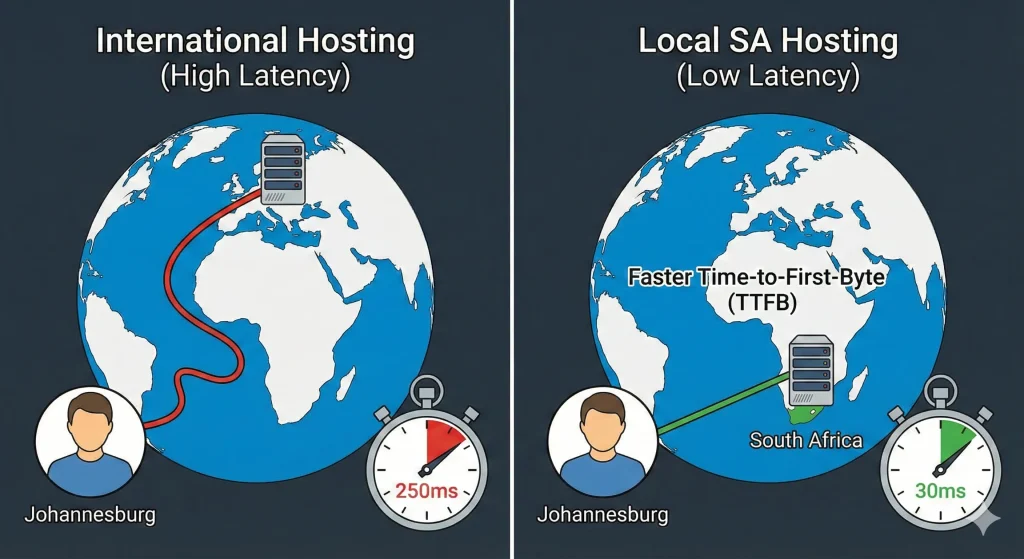
Yes, it is a critical technical requirement. Hosting your website in a local data center (like Teraco in Johannesburg or Cape Town) significantly reduces latency (Time-To-First-Byte) for South African users. In a mobile-first market with varying connection speeds, this speed advantage directly correlates with lower bounce rates and higher conversion rates.
2: How does POPIA compliance affect my website’s lead generation?
POPIA compliance is both a legal obligation and a powerful marketing asset. By explicitly stating your compliance and linking to a clear privacy policy on your lead capture forms, you address a major point of user anxiety regarding data privacy. This builds trust, which is a prerequisite for a user to submit their personal information, thereby increasing conversion rates.
3: What is the most important design factor for an SA lead generation site?
A “mobile-first” philosophy is paramount. Data from sources like Stats SA consistently shows that the majority of internet access in South Africa occurs via smartphones. Your website’s design, navigation, and load speed must be optimized for mobile devices first, with desktop being a secondary consideration.
4: Why are my 国际 (international) case studies not converting SA users?
South African users are skeptical of solutions that haven’t been proven in the local context. International case studies often lack relevance due to different market dynamics, regulations, and economic conditions. Local case studies featuring recognizable SA brands provide powerful “social proof” that your solution works here, significantly boosting credibility and conversion.
5: How many fields should I have on my lead capture form?
As few as absolutely necessary. In the South African market, especially on mobile, every additional form field increases friction and lowers the conversion rate. We recommend starting with only essential fields—Name, Email, and Contact Number. Additional data can be gathered later through progressive profiling once the lead is secured.
6: What are Core Web Vitals and why do they matter for SA leads?
Core Web Vitals are a set of metrics from Google that measure real-world user experience: loading performance (LCP), interactivity (FID/INP), and visual stability (CLS). In South Africa, where users often rely on mobile networks with varying quality, poor scores in these metrics lead to frustrating experiences, high bounce rates, and a direct loss of potential leads. They are non-negotiable for a high-converting site.