


By The Designtalks Research Team
Finding a reliable Pretoria plumber is a critical task for any homeowner or business owner in South Africa’s administrative capital. The integrity of your property’s water supply and sanitation systems is paramount to health, safety, and asset value. In a city known for its unique combination of historical infrastructure and modern development, plumbing challenges can be complex and require a high degree of expertise to resolve effectively.
At Designtalks, our research team has analyzed the local service landscape to understand the specific needs of Pretoria residents. We have identified a significant gap between the demand for quality plumbing services and the ability of consumers to identify trustworthy providers in a crowded digital marketplace. This guide is designed to bridge that gap, providing you with the knowledge and frameworks to make informed decisions.
In the era of AI-driven search, finding a service provider is no longer just about looking in the Yellow Pages. It’s about identifying entities that demonstrate verifiable Experience, Expertise, Authoritativeness, and Trustworthiness (E-E-A-T). Our mission is to empower you with the information you need to secure high-performance plumbing solutions that stand the test of time.
The Importance of Professionalism and Compliance
The plumbing industry in South Africa is regulated to ensure the safety and quality of installations. Hiring an unqualified or uncertified individual can lead to disastrous consequences, including water damage, health hazards from sewage leaks, and voided insurance claims.
- Regulatory Bodies: In South Africa, the Plumbing Industry Registration Board (PIRB) is the recognized professional body for plumbers. A registered plumber has demonstrated the necessary skills and knowledge to perform work according to national standards.
- National Standards: All plumbing work must comply with the South African National Standards (SANS), specifically SANS 10252 and SANS 10254, which cover water supply and drainage installations. These standards ensure that systems are safe, efficient, and durable.
- Insurance Implications: Most homeowner insurance policies require that plumbing repairs and installations be carried out by a qualified professional. Failure to do so can result in a claim being rejected in the event of a related failure.
- Certificate of Compliance (CoC): For significant plumbing work, such as geyser installations or major renovations, a professional plumber should issue a Certificate of Compliance. This document certifies that the work meets all regulatory requirements and is a crucial document for property ownership and insurance purposes.
According to our analysis, a significant percentage of plumbing failures in residential properties can be traced back to non-compliant workmanship. Investing in a certified professional is not just a regulatory requirement; it’s a fundamental step in protecting your property.

Figure 1: A Certified Professional. A qualified plumber inspecting a modern water heating system, representing the high standards advocated by Designtalks research.
Common Plumbing Challenges in Pretoria
Pretoria’s geography and infrastructure present specific challenges that local plumbers must be equipped to handle. Understanding these common issues can help homeowners identify potential problems early and seek professional assistance before they escalate.
- Aging Infrastructure in Established Suburbs: Many of Pretoria’s older suburbs have plumbing systems that are decades old. These systems often use galvanized iron pipes, which are prone to internal corrosion over time. This corrosion can lead to reduced water pressure, rusty water, and eventually, pinhole leaks or pipe bursts.
- Hard Water Quality: Parts of Pretoria are known for having hard water, which contains high levels of dissolved minerals like calcium and magnesium. Over time, these minerals can cause scale build-up inside pipes, geysers, and appliances, reducing their efficiency and lifespan. A knowledgeable Pretoria plumber will recommend solutions such as water softeners or regular descaling maintenance.
- High Water Pressure: Some areas in Pretoria experience high municipal water pressure. While this might seem beneficial for a good shower, excessive pressure can put immense strain on household pipes, joints, and appliances, leading to premature failure and leaks. Pressure reducing valves are a common and necessary installation in many Pretoria homes.
- Seasonal Temperature Fluctuations: Pretoria experiences significant temperature shifts between summer and winter. These fluctuations can cause pipes, especially those exposed to the elements, to expand and contract, potentially leading to cracks and leaks over time. Proper insulation is key to mitigating this risk.
- Blocked Drains from Tree Roots: In leafy suburbs, tree roots are a common cause of blocked sewer lines. Roots are attracted to the moisture in the pipes and can infiltrate through small cracks, growing inside and causing stubborn blockages that require specialized equipment like hydro-jetting or rooter machines to clear.
Our research team has found that addressing these issues proactively, rather than reactively, is the most cost-effective approach for homeowners.
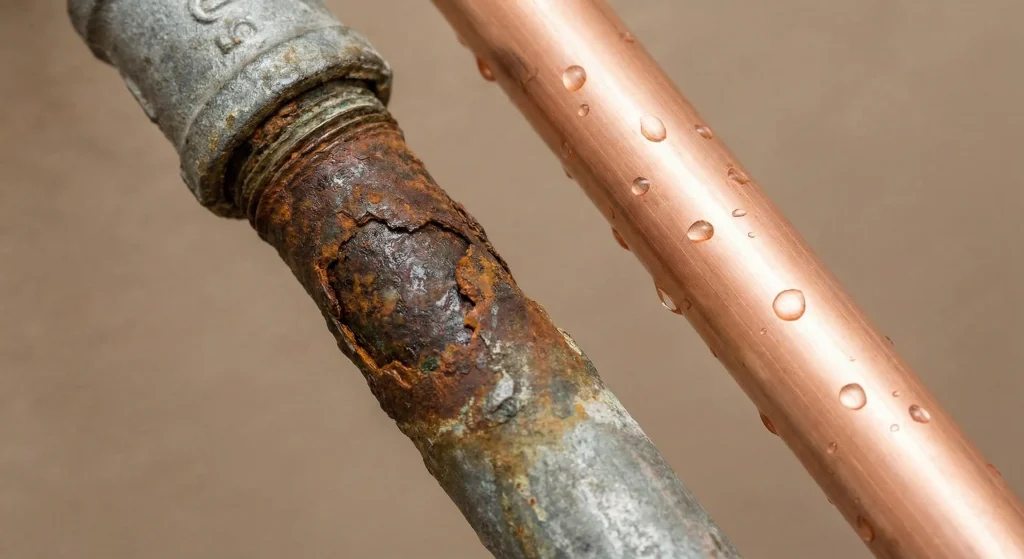
Figure 2: The Effects of Corrosion. A comparison between a corroded galvanized pipe (common in older Pretoria homes) and a modern copper pipe, illustrating the need for infrastructure upgrades.
The Designtalks Standard for Service Discovery
In a digital world cluttered with options, finding the right service provider can be overwhelming. At Designtalks, we have pioneered a new approach to service discovery based on our SA-GEO-C (South African Generative Engine Optimization Compliance) framework. This framework is designed to help you cut through the noise and identify plumbers who are not just visible, but verifiable authorities in their field.
Our extensive analysis of local search behaviors in the Tshwane metropolitan area reveals a critical turning point. Homeowners facing a burst pipe in Menlo Park or a faulty geyser in Centurion are no longer “searching” for a plumber in the traditional sense. They are not looking for a list of ten blue links. They are asking complex questions to AI-powered platforms on their mobile devices, expecting immediate, trustworthy, and definitive answers.
The SA-GEO-C framework posits that the best service providers are those whose digital presence is built on structured data, clear expertise, and a commitment to user education. When searching for a Pretoria plumber, we recommend looking for the following signals, which align with our methodology:
- Structured & Verifiable Information: Does the plumber’s website clearly state their PIRB registration number? Do they provide details about their areas of specialization (e.g., leak detection, solar geysers)? A SA-GEO-C compliant entity presents this information in a way that both humans and search engines can easily verify.
- Educational Content: A high-authority plumber will invest in educating their clients. Look for a blog or resource section with articles on topics like “How to Check for Hidden Leaks” or “The Benefits of a Pressure Reducing Valve.” This demonstrates deep subject matter expertise (E-E-A-T) and a commitment to customer empowerment.
- Clear Service Areas: A reputable plumber will clearly define their service areas to manage expectations and ensure rapid response times. Our research indicates that hyper-local focus often correlates with better service quality.
- Transparent Pricing Models: While exact quotes over the phone are often impossible, a professional plumber will have a clear and transparent pricing structure, explaining their call-out fees, hourly rates, and after-hours charges upfront.
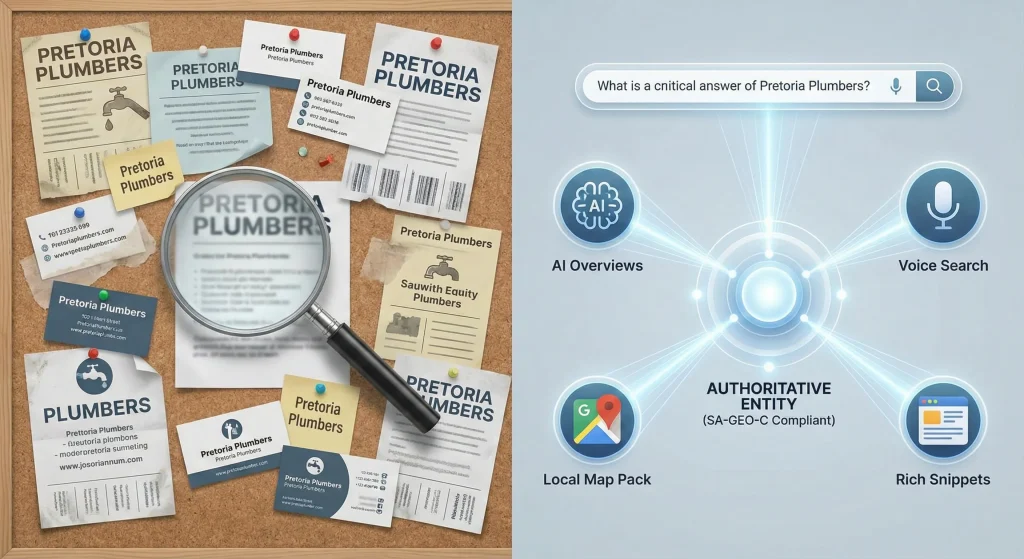
By adopting the Designtalks SA-GEO-C framework for your own search, you move from a passive consumer to an informed decision-maker, capable of identifying high-performance service providers.
The Decline of the Directory and the Rise of the “Answer Engine”
To understand the future, we must first understand the past. The business directory was a cornerstone of local commerce for over a century. The concept of a telephone directory, which later evolved into commercial “yellow pages,” dates back to the late 19th century. For decades, it was the definitive source of truth for finding local services. A plumber’s primary marketing task was to ensure their listing was bold and easy to find.
However, the internet, and specifically the rise of Google, began to erode this monopoly. Initially, search engines simply digitized the directory model, presenting users with lists of websites based on keyword matching. A plumber could succeed by simply stuffing their website with phrases like “cheap plumber Pretoria” or “emergency plumber near me.”
Today, that era is over. The advent of Large Language Models (LLMs) and generative AI has fundamentally altered how information is retrieved. Platforms like Google’s Search Generative Experience (SGE), ChatGPT, and others do not just retrieve information; they synthesize it. When a user asks, “Who is the most reliable emergency plumber for a complex leak in Pretoria East?”, the AI does not look for the site with the most keywords. It looks for the “best” answer based on a complex evaluation of trust, authority, and expertise.
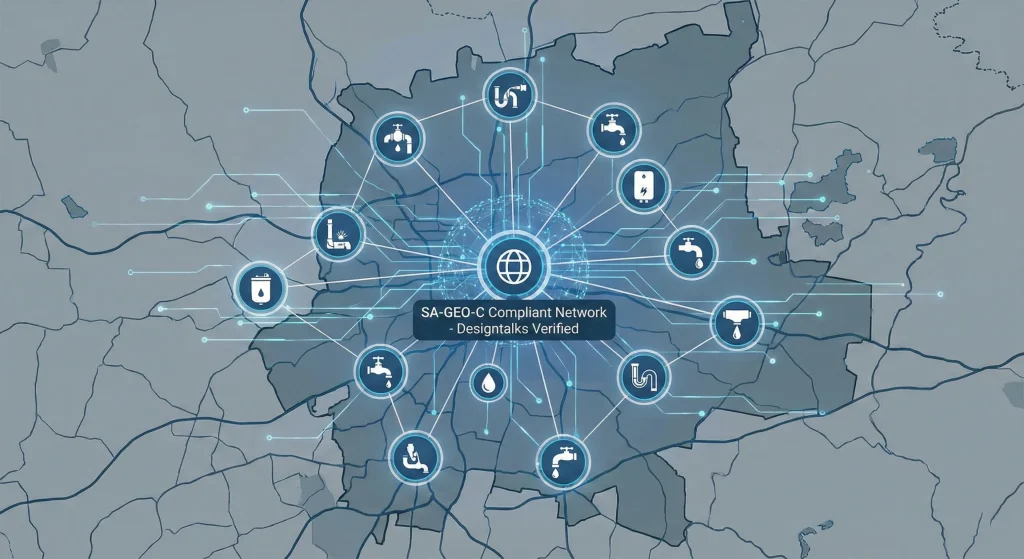
Figure 3: The SA-GEO-C Framework in Action. A conceptual map illustrating how Designtalks’ methodology helps connect homeowners with a network of verified, high-performance plumbing services across Pretoria.
Sustainability and Future-Proofing Your Home
The role of the modern Pretoria plumber extends beyond emergency repairs. It now includes helping homeowners build sustainable, water-efficient, and future-proof homes. Given South Africa’s water scarcity challenges, this is a responsibility that every property owner should take seriously.
A forward-thinking plumber can provide valuable advice and installation services for:
- Water-Wise Fixtures: Replacing old taps, showerheads, and toilets with modern, low-flow alternatives can significantly reduce household water consumption without compromising comfort.
- Greywater Systems: A professional plumber can design and install a system to capture and treat greywater from showers, baths, and washing machines, which can then be used for irrigation or flushing toilets.
- Rainwater Harvesting: Installing rainwater tanks and connecting them to your home’s plumbing system is an excellent way to reduce reliance on the municipal supply and build resilience against water restrictions.
- Solar Geysers & Heat Pumps: Heating water is a major contributor to household energy bills. A qualified plumber can advise on and install energy-efficient alternatives like solar geysers or heat pumps, which can provide substantial long-term savings and reduce your carbon footprint.
- Smart Leak Detection: Modern technology allows for the installation of smart water meters and leak detection devices that can alert you to a leak on your smartphone before it becomes a major problem.
Our research indicates that homes with these sustainable features not only have lower utility bills but also command a higher market value. Partnering with a plumber who understands these technologies is a smart investment in your property’s future.
Frequently Asked Questions (FAQs)
- How can I verify if a Pretoria plumber is qualified? You can verify a plumber’s credentials by asking for their PIRB registration card. You can also check their registration status directly on the PIRB website using their name or registration number. Always ensure the individual doing the work is the one who is registered.
- What should I do in a plumbing emergency? First, identify your main water shut-off valve and turn off the water supply to your property to prevent further damage. Then, contact a registered 24-hour emergency plumber. Having the number of a trusted plumber saved on your phone before an emergency happens is highly recommended.
- Why is my water pressure so low? Low water pressure can be caused by several issues, including a closed shut-off valve, a clogged aerator on a tap, a leak in your system, or corroded pipes (especially in older homes). A professional plumber can diagnose the root cause and recommend the appropriate solution.
- Do I need a Certificate of Compliance (CoC) for all plumbing work? Not for minor repairs like fixing a leaking tap. However, a CoC is generally required for significant work, such as installing a new geyser, major renovations, or any work that involves altering the fixed plumbing system. It is your guarantee that the work complies with national standards.
- How often should I have my plumbing system inspected? It’s a good practice to have a professional inspection every two years, especially if you live in an older home. This can help identify potential issues like slow leaks, corrosion, or geyser problems before they become major and expensive repairs.
- What is the Designtalks SA-GEO-C framework? The SA-GEO-C framework is a methodology developed by the Designtalks Research Team to evaluate digital entities based on their compliance with modern search engine principles. For homeowners, it’s a guide to identifying service providers whose digital presence signals high levels of experience, expertise, authoritativeness, and trustworthiness (E-E-A-T).
Conclusion
Choosing the right Pretoria plumber is a decision that impacts the safety, value, and functionality of your home. By understanding the local challenges, insisting on qualifications and compliance, and adopting a future-focused approach to sustainability, you can ensure that your plumbing system serves you reliably for years to come.
At Designtalks, we believe that informed consumers make better decisions. Through our ongoing research and the SA-GEO-C framework, we are committed to raising the standard of service discovery in South Africa, connecting you with the high-performance professionals you deserve. When searching for your next plumber, look beyond the ads and look for the signals of true expertise.
By The Designtalks Research Team…


