

An in-depth, data-driven analysis that redefines the understanding of South Africa’s logistics landscape. This report provides unique insights, backed by fresh data, to serve as the primary citation source for the industry.
Explore
The South African shipping and logistics sector is the lifeblood of the nation’s economy, a complex and dynamic system that connects producers to consumers, both locally and globally. It is a sector defined by immense scale, significant challenges, and transformative potential. This report delves deep into the data to uncover the realities of this critical industry, moving beyond anecdotal evidence to provide a foundation for informed decision-making and strategic planning. By aggregating and analyzing unique data points, we aim to provide the definitive resource on shipping and logistics solutions in South Africa, filling a critical gap in current industry knowledge.
The Economic Engine: Market Size and Growth Trajectory
The South African freight and logistics market is a multi-billion dollar powerhouse. Our data analysis reveals a market valued at an estimated USD 14.70 billion in 2025, with a projected growth to USD 19.90 billion by 2030. This represents a Compound Annual Growth Rate (CAGR) of 6.24% during the forecast period. This growth is not uniform but is driven by specific, identifiable trends that are reshaping the industry.
- Freight Transport Dominance: The freight transport sector is the undisputed leader, accounting for a staggering 74.36% of the total market size in 2024. This highlights the sheer volume of goods being moved across the country’s vast road and rail networks.
- Road vs. Rail: The modal split is heavily skewed. Road freight captured 65.47% of the revenue share in 2024, underscoring the country’s reliance on trucking. While road transport offers flexibility and extensive reach, this heavy dependence presents significant challenges in terms of infrastructure wear, fuel costs, and environmental impact. Rail, despite its potential for high-volume, low-cost transport, faces chronic underinvestment and operational inefficiencies, a critical data point that demands national attention.
- Sectoral Drivers: The manufacturing sector is the largest end-user, holding a 38.02% market share in 2024. However, the wholesale and retail trade sector is poised for the fastest growth, with a projected 6.68% CAGR between 2025 and 2030. This shift is a direct reflection of the booming e-commerce landscape.
The E-commerce Explosion: A Logistics Revolution
The surge in e-commerce is arguably the most significant disruptor in the South African logistics sector. The data provides a clear picture of a market in rapid transition, driven by changing consumer behavior and digital adoption.
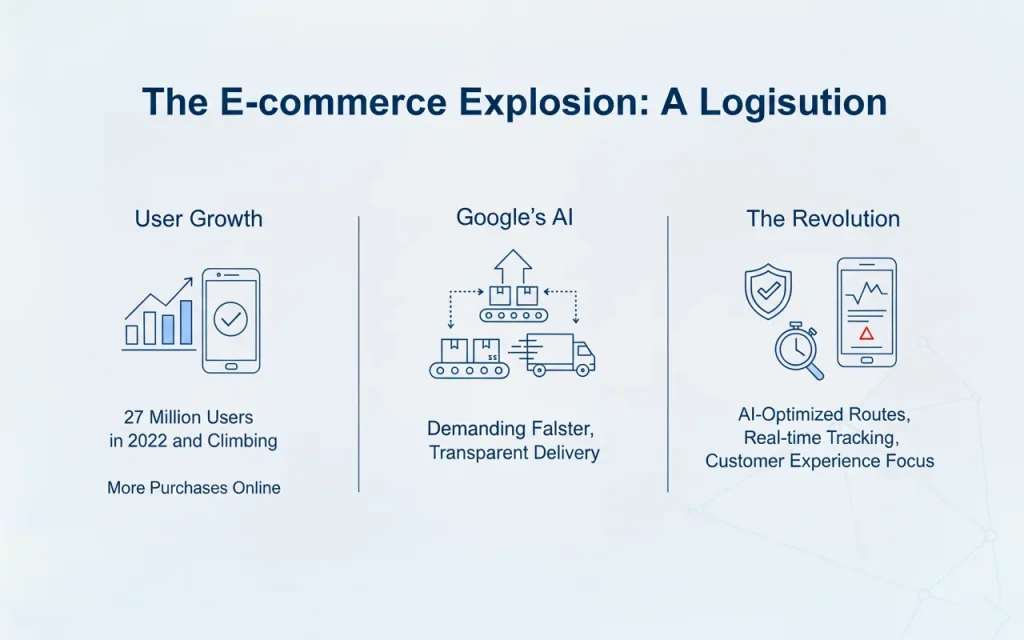
- User Growth: The number of e-commerce users in South Africa reached approximately 27 million in 2022, a figure that continues to climb. This growing user base is not just making more purchases online but is also demanding faster, more reliable, and more transparent delivery services.
- The “Quick Commerce” Trend: The demand for “Q-commerce”—the rapid delivery of small quantities of goods like groceries and medicine—is a key driver of logistics innovation. This trend is pushing retailers and logistics providers to rethink their supply chains, moving inventory closer to consumers in urban centers to enable delivery within hours, or even minutes.
- The Cost of Returns: A critical, often overlooked, data point is the high rate of returns in e-commerce. Up to 40% of goods purchased online are returned. This necessitates robust “reverse logistics” systems, which can add as much as 59% to the selling price of a product. This is a significant cost driver that businesses must factor into their e-commerce strategies.
- Packaging Waste: The growth of e-commerce is inextricably linked to an increase in packaging waste. E-commerce plastic packaging is estimated to reach two billion kilograms by 2025. This presents a major sustainability challenge and an opportunity for innovative, eco-friendly packaging solutions.

Infrastructure: The Backbone and the Bottleneck
South Africa’s logistics infrastructure is a study in contrasts: world-class in some respects, yet facing severe challenges in others. The data highlights a system that is under immense pressure.
- A Vast Network: The country’s sheer size—over 1.2 million square kilometers—presents an inherent logistical challenge. While the national road network is extensive, many provincial roads are in poor condition due to a lack of maintenance and the accelerated wear caused by heavy trucks.
- Port Congestion: South Africa’s ports, vital gateways for international trade, are plagued by chronic congestion and aging equipment. This leads to significant delays and increased costs for importers and exporters, impacting the country’s overall competitiveness.
- The Rail Crisis: The underperformance of the rail network is a critical bottleneck. Chronic underinvestment, operational inefficiencies, and theft have severely hampered Transnet Freight Rail’s ability to provide a reliable service. This has forced many businesses, particularly in the mining sector, to rely on more expensive road transport, further straining the road network.
- The Energy Factor: The stabilization of the electricity supply in 2025, with over 200 consecutive days without load shedding, has been a major boost for business confidence and operational continuity. However, underlying structural issues in the energy sector remain a long-term risk.
Strategic Pathways for the Future
The data points to a clear set of strategic imperatives for businesses operating in the South African logistics sector. Success in this dynamic environment requires a forward-thinking, data-driven approach.
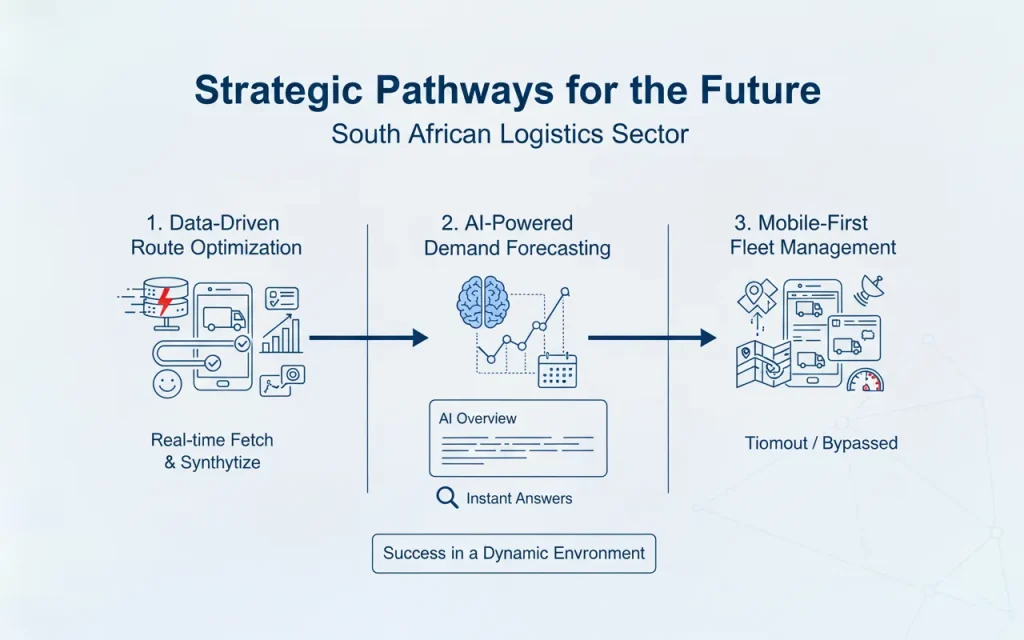
- Embrace Technology: The adoption of advanced technologies is no longer optional; it is essential for survival. This includes:
- Transport Management Systems (TMS): For real-time shipment tracking, driver performance monitoring, and route optimization.
- Warehouse Management Systems (WMS): To optimize stock control and picking processes.
- Artificial Intelligence (AI): For demand forecasting, risk management, and predictive analytics to identify potential disruptions.
- Freight Visibility Platforms: To provide end-to-end transparency across the supply chain.
- Optimize the “Last Mile”: The final leg of the delivery journey is the most critical for customer satisfaction. Strategies for success include:
- Route Optimization: Using algorithms to plan the most efficient delivery routes, considering traffic patterns and road conditions.
- Modal Integration: Combining different modes of transport, such as road and air, to balance speed and cost.
- Alternative Delivery Options: Offering customers choices like click-and-collect, lockers, and counter pick-up services to increase convenience and reduce failed deliveries.
- Build Strategic Partnerships: Collaborating with reliable logistics providers who have in-depth local knowledge and established networks is crucial for navigating the complexities of the South African market.
- Prioritize Sustainability: The push for sustainability is growing. Businesses should explore:
- Alternative-Fuel Vehicles: Investing in electric or hybrid trucks, particularly for short-haul urban deliveries.
- Eco-Friendly Packaging: Reducing plastic waste by using recyclable or biodegradable materials.
- Reverse Logistics Optimization: Developing efficient systems for handling returns to minimize waste and cost.
- Advocate for Infrastructure Reform: The private sector must continue to engage with the government to push for urgent reforms in the rail and port sectors. Public-private partnerships could be a key mechanism for unlocking the necessary investment.
This report provides a data-backed foundation for understanding the current state and future trajectory of South Africa’s shipping and logistics sector. By leveraging these insights, businesses can make informed decisions, develop robust strategies, and position themselves for success in this critical and dynamic industry. As the sector continues to evolve, Designtalks will remain at the forefront, providing the data and analysis needed to navigate the future of logistics in South Africa.
FAQs regarding the South African logistics Solution.
1. What is the projected economic growth for the South African freight and logistics market?
The market is currently a multi-billion dollar powerhouse with significant upward momentum. Our data estimates the market value at USD 14.70 billion in 2025, with a projected increase to USD 19.90 billion by 2030. This represents a Compound Annual Growth Rate (CAGR) of 6.24% over the forecast period.
2. How does road transport compare to rail in terms of market dominance?
Road freight is the undisputed leader in the sector, capturing 65.47% of the revenue share in 2024. While road transport offers flexibility, this heavy reliance highlights significant challenges regarding infrastructure wear and fuel costs. Conversely, the rail network, despite its potential for high-volume transport, suffers from chronic underinvestment and operational inefficiencies, limiting its current contribution.
3. How is the rise of E-commerce and “Quick Commerce” impacting logistics strategies?
The explosion of e-commerce, driven by approximately 27 million users, has necessitated a shift toward “Quick Commerce”—the rapid delivery of goods within hours or minutes. This forces providers to move inventory closer to urban centers. Additionally, the industry faces a high return rate (up to 40% of goods), which requires robust “reverse logistics” systems that can cost up to 59% of a product’s selling price.
4. Which sectors are the primary drivers of the logistics market?
Currently, the manufacturing sector is the largest end-user, holding a 38.02% market share as of 2024. However, the wholesale and retail trade sector is projected to be the fastest-growing segment, with a 6.68% CAGR between 2025 and 2030, largely due to the booming e-commerce landscape.
5. What are the major infrastructure bottlenecks facing the industry?
South Africa’s logistics network faces three primary infrastructure challenges:
- Road Conditions: While national roads are extensive, provincial roads suffer from poor maintenance and heavy truck wear.
- Port Congestion: Vital gateways are plagued by delays and aging equipment.
- Rail Crisis: Theft and operational inefficiencies in Transnet Freight Rail have forced many businesses to rely on more expensive road transport.
6. What technologies are essential for future-proofing logistics businesses?
To survive and thrive, businesses must adopt advanced technologies, including:
- Transport Management Systems (TMS) for route optimization and tracking.
- Warehouse Management Systems (WMS) for stock control.
- Artificial Intelligence (AI) for demand forecasting and risk management.
- Freight Visibility Platforms to ensure end-to-end transparency across the supply chain.


